PARTICULAR UNIVERSAL: Vaiapraia em residência em Castro Marim

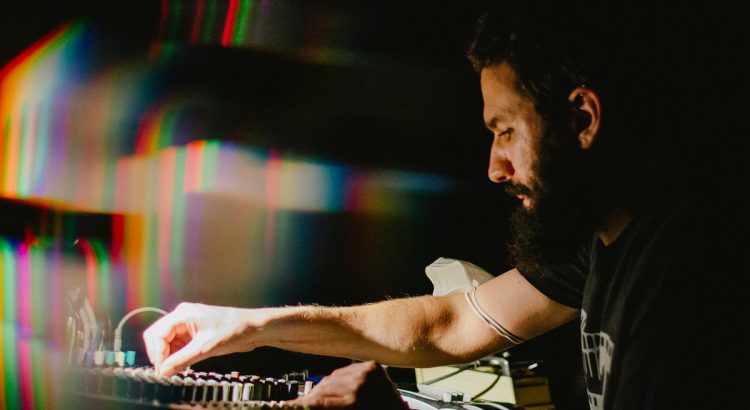
Rodrigo Vaiapraia é o próximo artista em residência no Concelho de Castro Marim, ao abrigo do projecto Particular Universal. 

Criador transdisciplinar e autodidata, lidera desde 2014 os Vaiapraia, banda maior do rock independente em Portugal, herdeiros directos e assumidos dos movimentos punk/riot-grrrl/queercore, aclamados em igual medida por Público, Blitz ou Time Out, por exemplo, com o álbum “100% carisma”, de 2020, como marco no rock português de qualquer época.

Entre os dias 6 e 13 de Maio, Rodrigo, juntamente com Ana Farinha, Daniel Fonseca e Beatriz Diniz, estará pela Quinta da Fornalha a trabalhar sobre várias ideias embrionárias colecionadas ao longo dos últimos dois anos, procurando “encontrar coletivamente a atenção, crescimento e reformulação que cada melodia pede”.

No dia 14, pelas 19h, no Anfiteatro ao ar livre do Revelim de Santo António, teremos a oportunidade, talvez, de conhecer pela primeira vez (ao lado de algumas das mais enérgicas e profundas canções de produção nacional dos últimos largos anos), as novas direcções de Vaiapraia. O concerto é de entrada livre.

Esta é a segunda residência com curadoria da Filho Único, parceira do projeto Particular Universal.

Interview with Sarnadas (OUT.FEST 2021 (II))

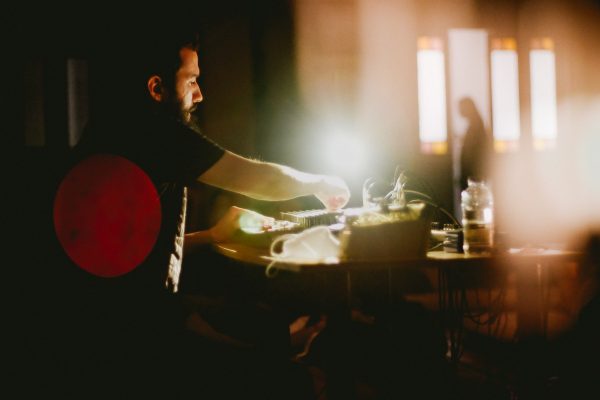
João Sarnadas, aka Coelho Radioactivo, was the man in charge of opening the last day of the second moment of OUT.FEST 2021, presenting a deep listening experience intimately connected to that of his debut work under his own name, the two double albums "The Hum" & "The Humm". At SDUB "Os Franceses" we were able to listen to two hours of electronic improvisation rich in harmony and texture in the perfect conditions for doing so: lying down, eyes closed, absorbing the sound.

We also had the chance to speak with the artist before and after the concert, and it is the compiled result of those interviews we present to you below.

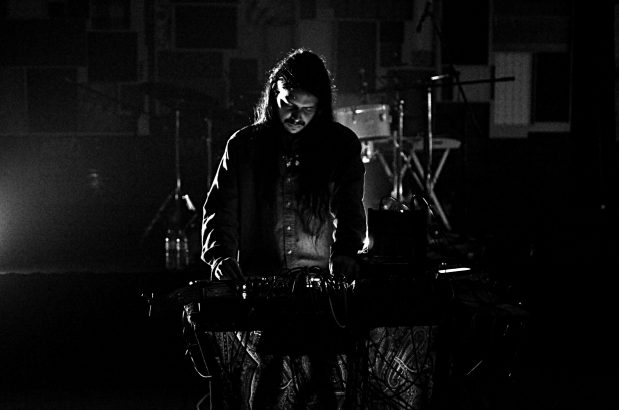
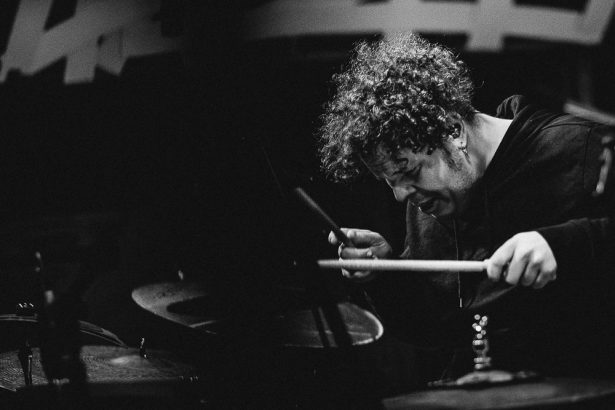
Interview by Tiago Franco. Photos by Nuno Bernardo and Pedro Roque (in black and white).


What was your first contact with this kind of long-form, minimal music?

Hi hi. I always loved long music, not necessarily in terms of its duration but more of its composition, and the use of continuous sounds, for many reasons, including the fact that often there’s some sort of drama associated with long music like that and that drama is something I relate to easily. Thinking about it on the spot, I’d say my first contacts with long-form minimal music happened with artists who aren’t particularly “durational” or minimal, the first pieces I recall are “Back to Schinzo” by Pascal Comelade and “Stranger Intro” by Bill Frisell (the intro for a Marianne Faithfull album) which were songs I heard a lot when I was a kid. Pascal is one of my favourite musicians ever, and fortunately he has enough albums to be able to constantly hear new things from him, I only discovered his first, more experimental albums around 5 years ago. “Stranger Intro” is a 30 second loop that I heard on repeat, and I decided to make a version of it for this album, although when I made it I didn’t necessarily know it would become part of an album, I only wanted to try playing it in order to listen to what a version with more than 30 seconds could sound like, and it ended up turning into D1 M Bombarda Transmission. When it comes to more intellectual stuff, I think the first long-form minimal musician I got into was La Monte Young, then maybe Terry Riley’s concert with Don Cherry in Köln. But I don’t know if these were my inspiration to make this album, especially because this long form comes more from the way I play than from a prior decision to do so. Those are obviously musicians I enjoy, so they ended up influencing my melodies and my thoughts, but I think the music is always the result of a much wider range of influences.


Could you tell me a bit about the equipment you use on this album? It was built by Inês Castanheira, who runs a DIY synthesizer workshop. Was it a commission or was it given to you with the three oscilators?

Yes, the synthesizer I used on this album and the one I now use live is a simple one, with three oscillators and three on/off switches, made by Inês Castanheira. I’m fortunate enough to share not only my life but also my house with Inês, so I have easy access to the things she builds, and this one in particular is one of the first she built, because she was starting to explore synthesizer-building at the time, and that’s precisely the reason why it’s so simple. We started using this synth and another one in a project we both have called Well, and I eventually started using it in collective pieces by Favela Discos, such as the “Desilusão Óptica” piece. That was the background I had in developing the approach to the material I created for this album, based on the use of this synthesizer, the mixer, loops and other effects pedals.


 You recorded this album in two days, which resulted in 8 hours of recordings, and it took you three years to mix it down to two albums of two hours each. What kind of methods did you use to bring it down to that size and what kind of challenges did you encounter in the cutting room?

Well, at the time when I did that recording session, I didn’t really have the idea of making an album out of it. As I said previously, I simply felt that I had arrived at a different way of playing from what I did as Coelho Radioactivo, for instance, and that I wanted to record something using that “language”. I actually feel like The Hum has something of Coelho Radioactive in it, I think that the melodies have something to do with that universe, as does the use of loops, which was something I did often both live and when playing by myself at home. At the time I had Nuno Loureiro’s mixer at my house, because I had used it at a Desilusão Óptica concert, and so I took the chance and started recording for two days, which as you mentioned resulted in 8 hours of music. It was actually more, around 11 hours, but I usually don’t count those hours because they weren’t that great to begin with. Basically, the biggest challenge was to understand the results I came up with, which led to two problems – first to reduce the music to a more acceptable length to make them understandable as “songs”, and second to figure out what those songs were, if they’d lead to three albums, to one, to two…which way to order them made sense…Eventually I managed to simplify it into two albums, one which was more “drone” and a more “ambient” one, or a more “atonal” and a more “melodic” one, a “daytime” album and a “nightime” album, but over those three years I started grouping the music with really quite different concepts, which probably aren’t that clear but which helped me understand what these songs were.


I read somewhere that you took cues from “the unique harmony of each city you lived in”, could you tell me a bit about that? Do you see any crossover between your music and architecture?

Well, in fact, even through it was inspired by things I feel about the record, the process, and my thoughts when I was making it, that’s a bit of press mumbo-jumbo. I’m always torn between conceptualizing the music I make or not, I usually don’t make things following a pre-defined concept, the only thing I’m interested when I’m recording is my intuition, and if I’m enjoying the music I’m creating. However, on the other hand, I’m interested in thinking about sound, and it’s something I do on my day-to-day for various reasons, either simply because of reading things about music and sound, or due to communicating about what I do solo or with the people I work with on a day to day basis – for instance, with the rest of the guys at Favela Discos when we develop collective pieces – we obviously need to speak about what we want to do, and either you want to conceptualize what you do or not you always end up having some thoughts about what you are doing. In that sense, something I’m interested in, for instance, is the relationship between ambiguity and deep listening. In the same way you can, with deep listening, discover melodies, rhythms, tones, etc in the soundscapes of a city, you can also discover new sound layers in the kind of music I make, in between the more obvious melodies you can discover other melodies, like you can distinguish them in the middle of the mass of sound and noise. In that sense, I think the relationship with the city soundscapes is that one, discovering some musical logic in the midst of the mass of sound we’re exposed to, between cars, fans and turbines, those noisy air conditioning things, and all the other things that make up the sound floor and which we sometimes don’t even notice.


The global phenomenon of ‘The Hum’, with tales of people who are almost chased by ultra-low frequencies in residential or industrial zones, is considered an unpleasant sound, one that leads to insomnia and headaches. Those are the last things I’d mention when describing your music. Does the album try to redeem this type of sound and put it in a different context, in a way?

Well, first of all thanks for the compliment. Regarding The Hum phenomenon, I think it’s unpleasant because it’s a sound that is an undesired and permanent intruder, but maybe that sound would be acceptable in an experimental music context (laughs). My idea isn’t so much to redeem the phenomenon, I simply think I adopted the name as a more encompassing term, like I said above, I think my The Hum is more about the sound of cities which isn’t immediately perceptible to us. This phenomenon isn’t audible to everyone, apparently some people are more susceptible to it than others. So, I wasn’t interested in talking about a violent, people-chasing sound, but simply about a sound which we only perceive when we become aware of its existence, or something like that. I’m interested in the idea, but not so much in the text-book definition of the concept, and like the music, one of the main reasons I chose the name was due to my intuition, I liked the mystic aspect of the idea and it looked like a cool name. Besides, I also used this theme and title for a comic book released by O Panda Gordo in 2016 or 2017, and at the time I thought it would be cool to connect the two things because they work on the same idea in very different ways.


How different is the album and the music when you play it live? Did you make any adjustments for the OUT.FEST concert?

Well, I’m not actually playing the music on the album, what I’m doing is using the same means and techniques to create new music. The album was created through improvisation, which is what I do live, although lately I’ve been bringing along some pre-recorded loops so it isn’t as boring. During rehearsals I tried to replicate some of the music on the album, but I wasn’t a fan of the result, since I was concerned with make the music sound like the album it ended up sounding like a cheap copy of it, which both wasn’t identical to it or as interesting as it. So I thought the best thing to do was to simply use the techniques I used on the album to create something new, which isn’t what’s on the record but is a part of it, in a way. For OUT.FEST, the only special thing I did was to select some pre-recorded loops, but the concert preparation was all very chaotic because it was the first time I used the scenography and it was all a bit last minute. I think the biggest adjustment I made for this concert was to use the “city” prop, or whatever you want to call it, which was something I wanted to do since the beginning but hadn’t had a chance to, and I was very happy with the result.


Still OUT.FEST

It's been almost two months, and we're now totally focused on OUT.FEST 2022 - the 18th edition of the festival, which is thus nearly coming of age - but this week we've released a mini-documentary which recaps the events of the second half of 2021's edition of OUT.FEST, which took place in October.

Created by Mário Jerónimo Negrão from interviews, video and sound gathered by the OUT.FEST team with the help of many collaborators and friends (for which we are thankful), it serves as a way to celebrate and remember six days of intensive listening, of long awaited reunions, and new and long-lasting discoveries.

You can find it here

Meanwhile, despite the end of the year drawing closer, we still have many good things in store for you all - so stay tuned for news early next week.

Interview with Vasco Alves (OUT.FEST 2021)

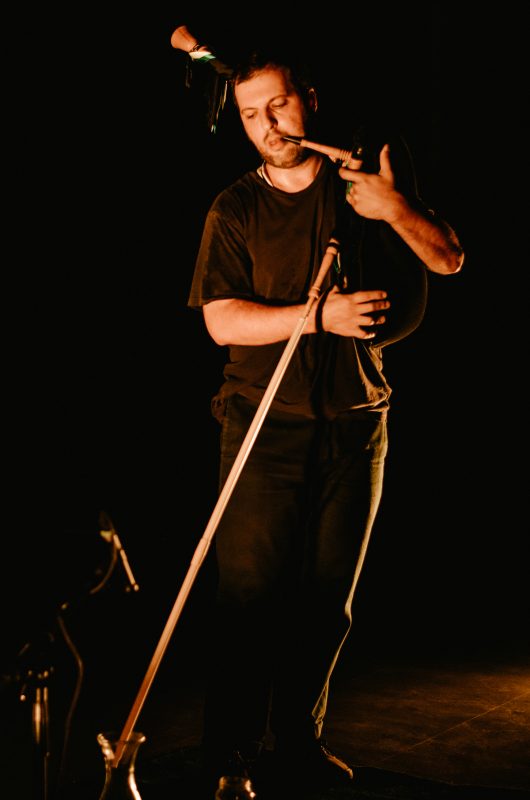
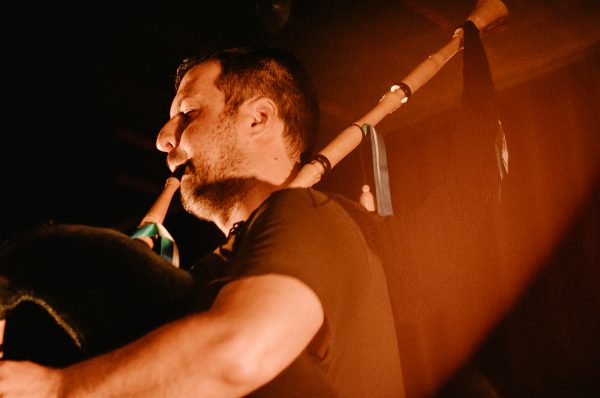
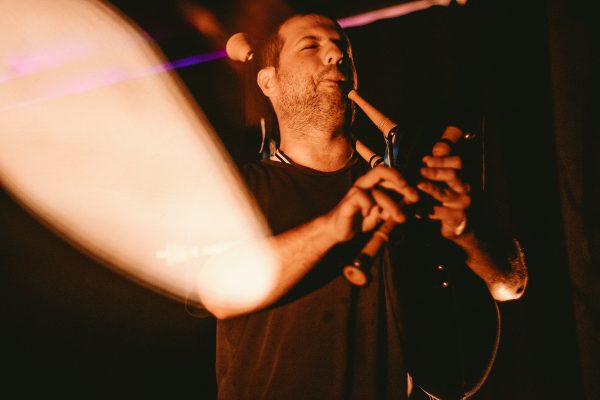
In the week prior to the start of the October moment of OUT.FEST 2021, we had the chance to talk to Vasco Alves - bagpiper for 'Os Belenenses' football club, member of VA AA LR and heroic investigator of acoustical phenomena and the materiality of sound, whose trajectory's been discreet but continuously fascinating, resorting to numerous sound sources and methodologies including synthesis and amplification techniques, tape recorders, signal processing and – more recently – bagpipes.


Can you tell me a bit about your experience with the bagpipes? How did you start playing them and how did your relationship with the instrument develop over time?

I started learning the bagpipes in 2014, at the Lisbon Galician Centre, and during the first years I had a traditional learning experience, but I always wanted to use the instrument in a less conventional, more exploratory way, closer to the themes I’m interested in, and that’s something I was only able to do a few years after I started playing the bagpipes. I think it was about three years ago, maybe in 2018, I started preparing a few pieces which, although they also include some electronic material, work on acoustic phenomena and psychoacoustics above all. I always try to explore some kind of effect within that field.

And what drove you to this instrument specifically? Because in 2014 you were already active in making music, right?

Yes, I had been playing for quite some time by then...I had two experiences which were somewhat surprising, so much so that when they occurred I didn’t even imagine I’d be learning an instrument one day. One was a concert by Paul Dunmall in London - he’s more associated with jazz and even improv as a saxophone player, but he has a personal collection of bagpipes from around the world. Me and a friend invited him to play at a concert we were organizing when I lived there, and he did a performance where he played with several bagpipes throughout, and there were some amazing moments in there that I wasn’t expecting, even in terms of the sound material...when the bagpipes were amplified, if you closed your eyes you could imagine it was a laptop concert, a computer music concert...well, there were some really surprising elements, and then when I returned to Portugal in 2014, I ended up attending one or two concerts where the instrument was also used, although outside this context, but then I decided to learn it, in a somewhat spontaneous way. And that was it, I liked it and kept doing it and at this point it’s possibly the instrument I work with the most, even though I also explore similar themes when I work with electronics.

On that topic, when did you become interested in electroacoustic music? Was there a specific moment when you discovered that kind of music and thought that was what you wanted to explore?

I don’t know if I can name a specific moment, I think that it’s probably related to the music I heard during my adolescence, which led me to have some interest in exploring, in following the more exploratory path in music, the less conventional one, so to speak. And in my university years, if I’m not mistaken, I learned how to make some contact microphones and some other small things (I think my first recordings were with that material actually, even if they were done in a very naïve and intuitive way), and well, things evolved from there, I kept being interested in instrument building, in exploring materials…Obviously, the things I’m interested in nowadays aren’t necessarily the ones I was interested in at the time, but it’s been evolving, going through several phases, although I think there’s something that unites them.

So what was the music you heard as a teenager that led you in that direction?

Well…in my early teens I listened to a lot of Sonic Youth (and all the musical scene they were a part of), that’s possibly one of the first times I saw instruments being used in a less conventional way. And going back to your previous question, there was actually a moment when I discovered Christian Marclay’s work, I saw one of his exhibits as well as some concerts and tapes, and I think that moment marked me somehow, also because of the way he used the materials and the sound that was generated by the things he built, the processes he explored and which were part of his pieces, all of those were very influential to me at the time. Soon after I discovered the great master, Alvin Lucier. There are many other things which have influenced me since, like the work of Rafael Toral, and Sei Miguel…But well, it becomes difficult to name specific influences, since I’ve been influenced by so many things.

The relationship I see between all of those musicians is in part related to what Eddie Prévost says and tries to teach others, which is to see an instrument as something to play “outside the box”, that you should be something of an explorer and improviser with instruments. On your website I saw the radio you played, and it looked familiar – were you at Eddie Prévost’s workshop [at OUT.FEST 2015]?

Yeah, I also used to take that radio to the workshops he organized in London, which were a weekly improvisation meet-up, every Friday night in a church basement, where everyone could show up and join, and for about two years I went there regularly, so that’s why I also participated in the Barreiro workshop that OUT.RA organized.

And what did you learn from those workshops? How did they help you develop your work?

I think those workshops had quite the impact on me at the time, but nowadays I don’t feel as close to or interested in free improvisation, which is basically what Eddie Prévost is focused on. Those workshops were an amazing thing for me at the time, both on a personal and social level, there was a dynamic which to me was new and quite exciting, the way the workshops took place and how people played there… there were small rules, but there was a lot of openness and fluidity and no-one ever told you what you should or should not do, and that fascinated me for a while. Meanwhile I think it lost a bit of…I don’t know if I became less naïve about that idea, or if I simply became more interested in other ways, other things…but I also experienced some incredible moments, there, with really great musicians, and I think that at a certain point, towards the end of the time I participated in those workshops, I would go there more to watch one or two people (like Seymour Wright) whose work I was interested in and fascinated by, and the five or ten minutes I’d hear them play would make the hours I’d spend there worth it…


You were saying that your interests started to change – can you tell me which part of music interests you the most right now?

Well, about free improvisation: I think that’s not the core of what I’m interested in nowadays. My work, be it electronic or acoustic, always involved a lot of volatility and so improvisation is still very important to me, but I like to work on themes, be them things that came from working with an instrument (in the wider sense), from the “life” that volatility and instability can generate, but also spatial themes, of the connection between the instrument and the space, and trying to somehow find a way to create work which fits in this context. Improvisation is obviously always present, because I have structures but I don’t define what I do exactly, there’s space for me to react to things in the way that seems the most appropriate in the moment. The bagpipes themselves, being such a rough, primitive instrument in a way, and maybe the instrument’s limitations themselves, I think they’re a good way to explore this kind of ideas, because in a way I feel like that simplicity and rawness then allow others parts to come to the fore, to have some importance, be heard and perceptible, and the bagpipes end up being the trigger for those events, in a sense… trigger para esses eventos….

That brings me to another question – I notice that in your music, especially your most recent work, there’s a certain duality, between folklore, some very primordial stuff, and a more technologic and machine-like angle. I don’t know if that’s something you agree with…

It’s certainly not intentional. The tools I use often tend to define what I do. The bagpipes fell into my lap so to speak, like other things I’ve been using, and my perspective has been more like: “What can I do with this instrument, what does it give me, how can I apply it to what I’m interested in doing sonically?” In the concert I’ll be presenting at OUT.FEST, the computer is simply generating a frequency, a sawtooth wave, which has a very similar sound to the bagpipes, it ends up being almost like a second player, which then generates this clash of frequencies…It’s a bit hard to define, but like I mentioned I’m interested in exploring instabilities in the processes and mechanisms I build, and I try to do it with the bagpipes as well. But like I said it’s not a conscious decision, I like to work with rawness, I’m interested in a certain dryness in things and materials, and I move towards musical construction from there, to develop the work I do, but in fact, to me these are all things that fit mentally in the same place: to use the bagpipes or a synthesizer or a circuit I built or a radio, the ends to me are the same, there is no concept behind that.

You use the instruments because you really like their sound…

Yes, and because I’m interested in the rawness and brutality of things like white noise, or the sound of the bagpipes, which is also quite simple, in the simplicity in working with electronics, I’m really fond of all this…let’s say that the notion of economy, of doing a lot with meagre means is something I’m really interested in and that I strive for in the processes and things I create.

I wanted to ask you about the work you’ll be presenting at OUT.FEST, “Gaita Contra Computador” (“Pipes vs Computer”). The title calls to mind the idea of opposition, of combat, almost…You mentioned there’s a computer tone that’s really close to that of the bagpipes, can you tell us a bit more about that work of yours?

“Gaita Contra Computador” is the title of a CD I released last year, and yes, the work is based on the creation of a few pieces which are relatively short, some of which influenced the name of the album and which involve the bagpipes used without amplification in a space, while the computer is generating a frequency I programmed which generates tones that are very similar to those of the bagpipes, and the idea is that when frequencies cross in the space they create a some acoustic effects (like pulses, for instance)…My intention is to give listeners an impression that there’s a new sound emerging at a certain point, an union between the two sounds where eventually you stop being able to distinguish one from the other…but overall I’m interested in knowing how sounds cross in the space, it’s like I have another person playing with me there, but when you explore frequencies which are very, very close and you move around in the space there are small effects that come to being, in the acoustic space in this case, the concert venue.

Then I might present some acoustic pieces as well, without the computer, where I explore the bagpipes and their physical limits, I try to pull the pick to sound registers which aren’t exactly the ones the instrument is meant to reach, looking for flaws and exploring those flaws and that instability. Then there’s another piece which involves adding a tube to the bagpipes and pointing that frequency to a few jars on the ground, and explore the jars’ resonating frequency – when you bring the sound of the bagpipes closed to the jars a new frequency emerges, and it’s a piece focused on that interaction…and my concert will explore these ideas – they are pieces which somewhat resemble what’s going on in the record but which are in constant evolution, every time I present or rehearse them they are adjusted and mutate over time.


And the space itself influences the way the pieces sound like – I remember, for instance, having had Erwan Keravec play in Barreiro, and he was very happy with the natural reverberation and amplification of the church he played in…How has your experience been like in playing in different spaces, do you also feel like it has had a big impact in the way you play?

Of course, it always does, not only in acoustic pieces but also in the ones I use the computer in…the resonance of the space tends to make the pieces sound a bit better, I think, they might not work as well in a very dry space…I could be forced to think of something else, but yes, the acoustics of the space are really important, it’s something I always have to keep in mind every time I play, and in this case I’ve already been to the library [the Municipal Library of Barreiro, where the show took place], to check it out and try playing there, and that ends up influencing what I’ll present somewhat…

You were telling us how you’re really interested in intensity a while back. I wanted to ask you about “Estrada Longa” [Long Road] – I was listening to it a few days ago and felt that it had something close to motorik, not so much in the rhythmic sense of krautrock, but as a certain propulsion and trance, not in an intense way, but conveying motion, and the bike ride…Which is what inspired “Estrada Longa”, your trip on the N2 on a bike in the middle of the pandemic, right? Can you tell us a little about your trip, and how that influenced the record?

Yeah, that was it. I made the trip on my own on a bicycle, and at the time I hadn’t planned to make anything out of it, I simply started riding and seeing tonnes of place names that I liked, and so I decided on the first day to start recording the names of the places I passed through. Almost all of them, although I didn’t do it constantly – first I’d pass through a few, record it on my phone, then I’d go a little further and record some more, and by the end of the trip I had almost 150 place names recorded, from Trás-os-Montes to the Algarve.

Then I spent some time thinking about how to use that material. Those were phone recordings, and often I was pedalling as I recorded, so even though I thought they were interesting I couldn’t quite get them to fit, and so I concluded that the raw material wouldn’t be as interesting (even though I find that aspect interesting as well). What I ended up doing was to grab a pair of synthesizers I had at home and which I use often and which basically allow you to create a sort of patterns with a lot of instability and volatility due to the way they are connected, there’s a cyclical aspect to it, but non-linear in a fashion, and I thought that the two things could be joined, so I created other patterns, one for each day of my trip, and I re-recorded the names of the places I passed through each day.

And that’s how the record came to be – as you mentioned, there’s that cyclical aspect of the synthesizer, and I wanted to get a sense of monotony across as well, I was interested in that idea of long days, of never-ending but constantly mutating roads…that’s how the pieces emerged and they had that final result, the album. I’m not sure if it makes sense to follow up with it, I think that work ended there, with that piece, which sometimes I think could have been longer: instead of 50 minutes it should be four hours long, but that’s how it ended up like…


The last question might be a bit of a silly one, but: how did you become the piper for Belenenses [a football club based in Belém, Lisbon]?

(laughs) My connection with Belenenses comes from my family, my grandfather and great-grandfather were from Belém, I’m a supporter since I was born, etc…The club was recently relegated to the last division, because of the conflicts with B-SAD, and the first time they played after that I decided to take the pipes with me. I had already spoken with some friends who were connected to the supporter group, and I started playing the club’s anthem, everyone started singing in the stadium, and at the end of the day there were already videos on YouTube connecting that moment with an old tradition of the twenties, the Belenenses’ fifteen minutes – supposedly the club made a series of comebacks in really important games that year, including a famous one against Benfica. And so for many years the supporters would make a lot of noise in the last fifteen minutes, I heard that with whistles and pans, and someone connected my playing to that tradition, so now during games, in the last 15 minutes, I play the anthem and some other supporter group (the Fúria Azul) songs, and it became something regular in the games. Now I feel that I have this responsibility, so every Sunday I’m at the stadium with the bagpipes, there’s two of us playing them right now actually…so yeah, that’s where the bagpipes-Belenenses connection came from.

That’s really cool. You weren’t aware of that tradition yourself, were you?

I did, my grandfather told me as a child, but it wasn’t with the bagpipe you know, he just said that they used to make a lot of noise in the stands, or they’d play a whistle three times, but meanwhile that completely died out, there’s even books in the 60s of people connected to the club who mention that players didn’t know what the Belenenses’ fifteen minutes were anymore…and that was in the 60s, in the 90s I’d still hear a few whistles, but it was practically forgotten, and now it has some meaning again, it’s funny.

Interview by Tiago Franco and Diogo Carneiro. Pictures by Pedro Roque (the first one) and Nuno Bernardo (the remaining).


Interview with Erwan Keravec

Erwan Keravec is a Breton piper whose eclectic path ranges from traditional to contemporary music and improvisation. This encompasses playing solo music written for him by a wealth of contemporary composers, leading a piper quartet, improvising with key figures of european jazz and writing and playing music for modern dance and theatre companies. He performed at the Nossa Senhora do Rosário church in Barreiro on July 2019, and after his soundcheck he took the chance to interview him. You can read that interview below.

Hi Erwan, can you tell us more about your background as a musician and how you chose the bagpipes as “your” instrument?

I grew up with traditional music. My parents were dancers in the traditional Brittany style, with traditional music from Brittany, and when I was a child the first instruments I heard were the bagpipes and the bombarde, a kind of oboe. I learned to play the bagpipes in their traditional context for marching and dance. One time I played with an orchestra in Bern with bagpipes, snare drums and the bombarde and we met a jazz big band. That was when I improvised with the bagpipes for the first time, and after that I decided to focus on improvised music, even though my background is really in traditional music.

Have you tried other instruments in the bagpipe family, from other musical traditions? How would you compare them to your own?

Two years ago I played in a trio with three bagpipes: one from Algeria, another from Iran and mine, from Brittany. And my idea at first was that the three bagpipers would play solos, and when we were practicing of course we tried each other’s bagpipes, and it wasn’t very easy (laughs). It’s not the same fingering, of course the system of breathing is the same, but the fingering is totally different, so it’s not very easy to play other kinds of bagpipe…I focus on the one from Brittany exclusively.

You’ve been touring with your ‘Revolutionary Birds’ trio (with Wassim Halal and Mounir Troudi). How did this collaboration come about?

Revolutionary Birds began as a commission by two festivals, one in Beirut, Irtijal, and another in Paris, la Voix est Libre, and the idea the two directors had was to mix music from Iran, Lebanon, Tunisia and Brittany. It was not our idea at first, but after that the three of us decided to take this idea and to tour with it. For me this is different from what I usually do - when I play solo, in duo, trio, etc, it’s always my idea, but this was the first time I played in someone else’s idea. At the beginning I was like “ok, what kind of band is this”! We work a lot with percussion right from the start of the composition, so the structure of our music is all based on the bagpipe and the percussion and the voices come after. But it’s not what I usually do - usually I take an idea from beginning to end, so this is different for me.

How have the trios’ performances been received so far? Have you been getting good receptions by the audiences?

Yeah yeah, in all kinds of different contexts, even in rock music festivals. We don’t really play rock music but it’s not world music either…I don’t play music from Brittany, I just play the bagpipes from Brittany, and the singer, Mounir, doesn’t really sing Tunisian music either. He does some Mawwal, which is improvised music from Tunisia, but it’s not a song, it’s an improvisation. So, in traditional and world music festivals, the reception is good and in new music festivals, it’s the same, so…it’s strange. (laughs)

Today you’re bringing us your “Urban Pipes” performance – can you take us through the idea behind it, its guiding principles and aims?

At the beginning, in 2007, the project was only for recording, and at the time I didn’t want to play this music in concert, I just wanted to record. Being a solo bagpipe player is the traditional way to play the instrument, and when I decided to do this it was because I wanted to make new music on the bagpipes. So, I took the traditional form of this instrument, the solo bagpipe, and two years after when I started to play concerts, I decided to play just one piece and move around a lot, change a lot… After my second record I had changed a lot and kept composing and…”Urban Pipes” is…my conception of what bagpipe music is, what I can do with them.

When I decided to do this, I wanted to make music without any reference to traditional music. Is it possible for the bagpipe to be just an instrument on its own, not an instrument exclusively used in traditional music? What can new music for this instrument be like? That’s what I was after, but it wasn’t that easy because I grew up in that same tradition, so my ability to imagine music is of course influenced by traditional music. It’s really different now because I work a lot in new music, in contemporary music, so I can think about music differently now, but in 2007 it was really different… the traditional music in Brittany is the music of the countryside, not of the city, and when I decided to create this new music I tried to see what could be urban music for bagpipes.

Have you performed in churches before?

Yes.

Did you enjoy the experience?

Yes, of course!

Why is that?

Because the sound is really loud, there is a lot of reverberation. The sound can be everywhere, so it’s possible to have it come from the front, from the back, and churches are really wonderful for that, of course. And the sound is loud, I don’t really like to play outside because there are no walls there, there is no reflection, and in a church, reflections are everywhere, so… I love playing in churches.

How do you feel about this church and its acoustics?

It will be loud (laughs)…it will be loud. But that’s good! (laughs)

Interview - Clothilde and HOBO

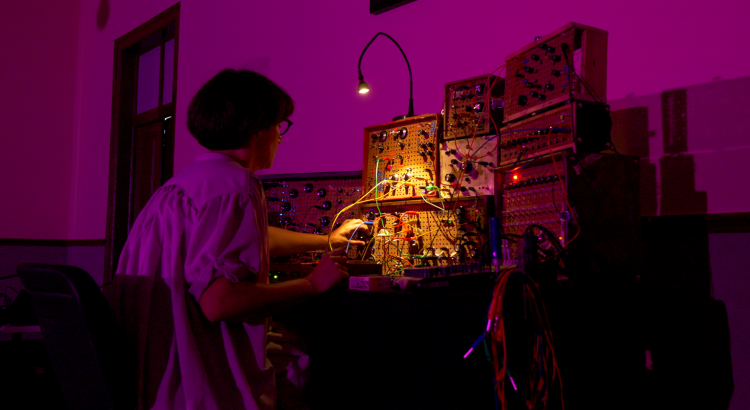
Clothilde é o alter-ego musical de Sofia Mestre, colorista, fotógrafa, desenhadora e não só, que se encontrou enquanto música na viragem para os 40. Trabalha a partir da herança de pós-minimalistas, improvisadoras e compositoras de mente aberta, como Pauline Oliveros, Maryanne Amacher, Daphne Oram, Eliane Radigue ou Delia Derbyshire, para criar a partir de bases electrónicas modulares – tecnologia feita pelo seu companheiro Zé, aka HOBO -, novas paisagens e realidades emocionais e estéticas. Em Outubro de 2018, durante a edição do OUT.FEST desse ano, onde testemunhamos uma bela actuação da artista na Escola de Jazz do Barreiro, o Alexandre Ribeiro e o Vasco Completo tiveram a oportunidade de ter uma curta conversa com os dois – Clothilde e HOBO – sobre o sistema electrónico único que usam e as suas origens, bem como o despertar de Clothilde para a criação músical.

When did you start building this kind of machines?

HOBO: I started thinking about this some six, seven years ago. At the time I was building some machines in cardboard (I always used the materials I had close by to build things) and one of the times I went searching for materials I went to my father’s house, who did radio assembly in Guinea-Bissau during the colonial war, and he had a breadboard and some chips along with some other stuff that he told me to take. I put them in my bag and then it was stored in a drawer for about a year, until I stumbled upon something that reminded me that I had that stuff at home. Then I started building things, first an amplifier in a Scotch-Brite box, very basic stuff, and it grew from there. I started thinking, “Ok, I want to send the sound somewhere, so I need an amplifier.” That was step number one. Number two: we need some oscillators, let’s do it. From there it kept growing, I kept researching, seeing what had been done before and what I could do differently. Nowadays with the internet you can take giant steps with these things – before it was much more complicated, all the information was only in books, but now you make a quick search and you get the gist of what you need to do, and once you learn what’s already been done you take a step back, explore the chip’s technical specifications, and use that knowledge to create your own things. That’s what the process has mostly been like, self-taught and unpretentious, doing it because I enjoy it.

About the specific machines the “machinist” uses, can you take us through how they work?

CLOTHILDE: There’s several of them…

HOBO: We didn’t bring all of them with us…there’s around ten over there, plus some keyboards, and in total we probably have around 20…the idea is that each of these machines should be able to be used independently and make sound on its own, kind of like a modular system but not entirely, because in modular systems you have to carry everything with you, but here if I want to just take one machine I do that and output its signal directly through a jack, or I can use a banana jack to send its sound somewhere else. I wanted it to be very versatile, so that I could play with one, or two, or all of the machines….

C: It’s interesting that it’s only now that we can play together – before we didn’t have enough gear to play at the same time. That’s a big part of why I play by myself – he’s got a project with a friend where he also uses these machines and if we both played at the same time we’d limit each other, because in order to make certain sounds you need these boxes to be connected, for modulating, filtering, whatever. Now we can though, and the next step is also to start a project and play together.

How did your activity as a musician begin?

C: I’ve always been crazy about music, but I never had the desire to make music, it was proposed to me, because people knew I played with him, and so it happened. We have a house in Meco with friends, for resting, and he [HOBO] would take his machines and we’d play around with them, but I never harboured any ambition of playing in concert one day…

I’ve been friends with Sonja from Labareda, the label I released my album on, for many many years now and she knows me very well – better than myself apparently – and so she challenged me to make something and I was like “You’re crazy…me?”. It wasn’t something I ever even wanted to do before, but I ended up thinking that I couldn’t spend my whole life considering it so…

You’ve recently released your first LP, “Twitcher”…does your career have anything to do with music?

C: Nothing.

Can you tell us a little about that?

C: I’ve always been a fanatic about music, ever since I was little – to the point where I’d start crying if my mother put something on that I didn’t like. It’s true! But I never worked in music.

My grandfather was the drummer for a great jazz band in the twenties, my mother made a tremendous effort to push me towards studying music (she wanted to study it when she was younger but my grandfather wouldn’t let her because she was a girl), my uncle plays everything…so music was always there.

I worked in advertising and cinema for many years, I’ve been a colorist, I like drawing, photographing, now I’m setting up a project with a few friends and we’re still figuring out what’ll come out of that…But this…I made “Birdwatching”, which was what Sonja challenged me for, a compilation, and that’s when I told her “well…I’ll do my best, I promise I won’t let you down, even if it kills me…”, because I’m a little demanding with myself, a little too much so even. Then she started talking about an album, and that made me go “so it’s not just a song anymore, huh?” but I had already passed the first hurdle, I had my first concert at Damas…then I played the second at Lounge, the third at Walk&Talk in the Azores, then at ZDB, by then I was even saying “well damn, there’s only Maria Matos left” (laughs). I don’t know what happened, I wasn’t expecting it, but I know I have an ear for music, I know everything’s here. I don’t count the measures, I feel them, it’s a lifetime of listening to music with a lot of passion reflected here. I made the album (the release party was on May 25th) and strangely it came out well. I was very happy, I didn’t know what was going to come out…

How has it been received so far?

C: It’s been insane, I don’t have the time to be an artist… (laughs) Just last month I had three concerts, at Festival Exquisito on the 13th, at WOS in Santiago de Compostela on the 15th, then in Porto in Passos Manuel on the 22nd, in a night organized by Fungo where Zé [HOBO] played with Marco (o Citizen:Kane), because we couldn’t play together, plus Nuno Patrício and Nicolai, the Fungo DJs, we all played and now I’m here. And meanwhile I have several proposals to answer…even as far as 2020, and I get really nervous with those things, I don’t even know if I’ll be alive then (laughs). But it’s a super interesting project and I think it’s totally my thing, because it’s a theatre play.

Viegas - Interview

Part of the impressive mina collective, participant in the Rabbit Hole parties and, for some time now, member of Rádio Quântica, Viegas is a Barreiro-born artist and DJ who was a part of OUT.FEST 2019's closing night at the A4 space. Before the festival we had the chance to speak with him about his artistic path and his activity in the collectives he is a part of in an interview you can read below.

How and when did you discover techno and electronic club music?

In 2014 I spent a few months outside Portugal, in Barcelona, and my way of getting to know the city and its people was by going out at night. Burial’s River Dealer had recently been released at the time and that ep was also a gateway to electronic music for me, especially for the musical scene in the UK, but to other things as well.

What kind of clubs and nights out did you usually go to, after that formative period? Usually here in Barreiro and in Lisbon I suppose?

In Barreiro my nights out were usually in the streets…but in Lisbon I’d go to Lux, as well as some Rabbit Hole parties and Príncipe nights.

Before we talk about your collective, I wanted to ask you about the Rabbit Hole nights, as they were parties which despite being associated with dance music were very eclectic, I even saw a friend of mine who plays drone music perform at one. Do you feel as if that mix of different music genres influenced your way of being a DJ?

In a way yes. At Rabbit Hole there was a place for all kinds of artistic expression, everything could be a part of one of those nights. That eclecticism in programming might have influenced me, yeah. Growing up in the suburbs also had a large impact in my way of looking at electronic music and in my interests. I grew up listening to Kuduro and Kizomba well before Techno or House or any other style…so lately my work has been in figuring out how to mix the many reference points I have into something appropriate for the moment when I’m playing.

Moving on to mina, how did it come to be and how did you join it?

Mina started after Rabbit Hole and Rádio Quântica (another project that I joined a little while after I started working with Rabbit Hole) joined forces. At the time Lisbon lacked an electronic music night that provided a space for people to experiment with their identity and sexuality…where rules were…implied and based more on mutual respect than those rules usually associated with more institutionalized spaces. Pedro Marum, one of Rabbit Hole’s founders who also joined Rádio Quântica around the same time I did, had the idea to start these mina nights with Violet and Photonz, the founders of Rádio Quântica, and since I was working with both projects I was invited to help out.

Speaking of Rádio Quântica, do you still have the “Mercúrio” radio show?

Well I’ve since changed the name to rave3000, and lately I haven’t done the show as often, but yeah.

How different are the playlists you make for radio shows and the ones you play on the dance floor? What are the differences and similarities, and what do you try to bring to one and the other?

Maybe I’ll start with the similarities: it all comes from the same place, I have similar criteria for both and I try to be inclusive and always focus it away from the centre. I don’t have as many concerns with the show, if the music is danceable or how it’ll be received, so I think it’s a much more experimental space with much less expectation from listeners. I always try to share the slot with other people as well, so it changes depending on whom I invite. On the radio, to me, the most important thing is to give other people a chance to access the platform, and I’m sure that if Rádio Quântica didn’t exist things would have been much harder for me.

You’ve played outside Portugal several times, in Berlin for instance…

Yeah…this last year I had the chance to play in several European capitals, like London, Paris, Athens…

Those are quite different cities, and known for their night life…how do you think Lisbon compares to those places? Is there anything unique about the city in that sense?

I feel more comfortable in Lisbon, so I am freer to experiment with some things. Usually I play in contexts where audiences are used to hearing all sorts of music and where that diversity is celebrated. Maybe this convergence is more normal because we don’t have as big a variety of nights dedicated to specific genres. In London, for instance, I felt the same, but in the UK there’s a very rich and diverse history of electronic music. I’m not sure if it’s unique, but since it’s a smaller city it’s easier to meet people from different scenes.

You studied documentary cinema, correct?

I started out studying Advertising and Marketing at the Escola Superior de Comunicação Social, but I quickly realized that wasn’t what I wanted to do, so I went on a one year Documentary Cinema course and studied Photography at Ar.Co and at the Fine Arts faculty.

I know you photograph the mina and Rabbit Hole nights. Do you feel that some of your education influenced your work? Not just as a photographer, but as a DJ as well?

I think it was the other way around, it was clubbing that ended up influencing my work in photography. My interest in photography arose from going on nights out because I felt the urge to create a record of what was happening. Now, I don’t know, in the future I’d love to explore the visual component of my shows more, so maybe it will change and photography will start influencing my way of DJing.

Coming back to Barreiro – You were born and grew up there, and according to one of your posts you would hear the festival from your bedroom. Can you tell me about your OUT.FEST experiences, starting from that moment in your bedroom?

I was living close to Ferroviários at the time, and the festival happened there several times. So I remember being younger and being unable to classify the kind of music I was listening to, and that was always interesting to me. When I started going it was very important for me to understand that there were other musical languages and possibilities…to see people with very creative approaches to their instruments and a patient and receptive audience. To discover ambient and drone legends who I would likely never cross paths with otherwise, all of this in incredible places that go unnoticed during the rest of the year. The kind of music I hear at home when I’m not preparing a set is very much influenced by what I hear at OUT.FEST.

Do you have a mix specifically prepared for OUT.FEST? What can we expect in one of the festival’s closing performances?

I’ll try to stay close to recent releases. I want it to represent what I’ve been listening to and playing in my latest sets somehow, prioritizing more experimental music that might not work as well in other contexts. I want to go to many places…but we’ll see what happens!

Interview by: Tiago Franco

Angélica Salvi – Entrevista

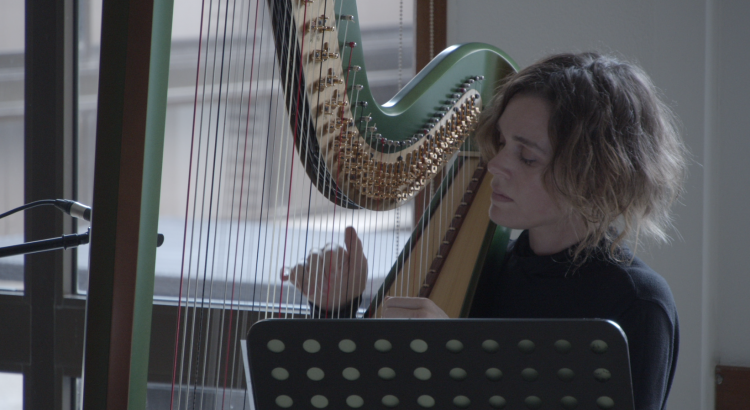
Angélica Salvi is a Spanish harpist who’s been based in Porto for a few years and who has produced exploratory work with her instrument with a truly heterogeneous variety of musical and transdisciplinary collaborators, albeit essentially focused on improvisation work. In addition to teaching at the local Music Conservatory, she has performed as a soloist with the Porto Casa da Música Symphonic Orchestra and the celebrated Remix Ensemble.

In her collaborations with iconic musicians such as Han Bennink and Evan Parker, in her work on stage and in her records, her vocabulary is ever adapting, though always maintaining its identity, working the timbres and effects according to contexts and ideas.

We had the chance to speak with her before her performance at OUT.FEST 2019, and we invite you to read the result of that conversation below.

When and why did you move to Portugal? What made you head to Porto, specifically?

I was living in the Netherlands, where I was studying, and I received an e-mail from one of my teachers saying that they needed someone to teach the harp at the Porto Conservatory and asked me if I was available. I thought, why not? So, in September 2011 I moved to Porto, going to the Netherlands once a month to finish the Masters’ degree I had started there.

How long ago did you start playing the harp?

I play it since I was 11.

And what made you focus on this specific instrument?

It was a coincidence. At the time I had started studying the piano. I went through the tests to study at the conservatory and when I was accepted, I chose the piano as my first option and the harp as the second (because it was the closest instrument to the piano). There weren’t any openings for the piano class, so I started studying the harp. And I liked it, even though I didn’t know the instrument well at the time.

It’s your main instrument, but was there any time you decided to change instruments, or were captivated by another one?

I had a piano at home (my mother studied and played the piano) and there was a time when I played both the piano and the harp, and in my opinion both instruments have a lot in common. Even though I like other instruments besides these two a lot, I never decided to seriously focus on any of them.

When did your interest in improvisation begin? It’s not usually something that’s taught in schools, especially for the harp…was there any moment, or an idea, artist or concert which led you to this approach to music?

Well, I was always very interested in creative, artistic pursuits in general. I studied fine arts for three years, I love drawing and always liked making up new things. At school I had a very conservative education (though fortunately they changed it up a little later on) so I had to search and explore on my own. I was looking for some kind of freedom and the only alternative I found at the time (which went beyond written music) was Jazz. I had some jazz lessons, I met a harp teacher who taught jazz at the University of Arizona and I studied under her for a year and a half. Then I continued my studies in the Netherlands, at the Conservatory and the Dutch Impro Academy, where I met the ICP Orchestra musicians and the Brokken-Fabriek (in Amsterdam) and that’s when I discovered the world of free jazz. So, I’ve been active in improvisation for several years now.

I spoke with Peter Evans a few days ago and he told me he always finds it difficult to teach people the “right” way to play music, and that his way of teaching is not so much to show how you “should” do something, but rather to serve as a guide to new musical possibilities. Do you share some of his doubts about the best way to teach music and the harp in particular? How do you guide your students in their learning?

I always have many doubts…As teachers we’re always learning from our students. I also speak with many colleagues and my students often so we can try new methods and formulas. Some of my students are very young, so I have to find a balance between the creative and theoretical parts. On one hand they have to learn the theory (even if that may be a little repetitive and monotonous at times) in order to be able to reach a certain technical and positional level required to master the instrument. Sometimes it can get complicated because it requires a lot of patience and consistency. It’s kind of like a martial art.

Searching for that balance is the difficult part. It also depends on the specific person and their personality, so it’s important to adapt the classes to each student and understand what they like or what they feel more comfortable with.

But other than that yes, I agree with Peter Evans: a teacher should serve as a guide to new musical possibilities!

Do you have any new projects which you’d like to tell us about?

I have several ongoing projects, they’re all on my website: www.angelicasalvi.net.

You’ve collaborated with several Portuguese musicians, like Rafael Toral – do you feel as if there’s a way of seeing music – particularly improvised music – which is unique to Portugal? Of course everyone has their own personality, but do you think there’s something special about this community in Portugal and their approach to music?

You’ve collaborated with several Portuguese musicians, like Rafael Toral – do you feel as if there’s a way of seeing music – particularly improvised music – which is unique to Portugal? Of course everyone has their own personality, but do you think there’s something special about this community in Portugal and their approach to music?

I had a feeling (especially when I lived in the Netherlands) that lately there’s a tendency to specialize: in education, in arts…it’s as if an artist needs to have a very specific predefined style, even with certain rules, in order to fit in somewhere or being labelled as something (a lot of record labels pressure their artists with this kind of thing). But I think that’s the wrong path to follow because the end result becomes overly formatted, globalized and boring…that’s why I feel very happy in this country, I think artists preserve and protect their essence a lot and the really believe in what they do. That’s the experience I had with the circle of musicians that adopted me.

Interview by: Tiago Franco


Interview with Will Brooks (MC Dälek)

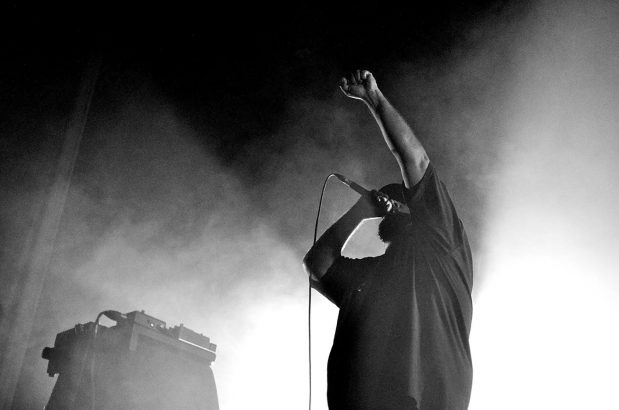
For the last OUT.FEST we had the pleasure and honour of having New Yorkers Dälek, one of the most adventurous hip hop groups around, on their return to Portugal after more than a decade. Before their concert, we spoke with Will Brooks (MC Dälek himself) about their studio approach, past and future collaborations, and the artists that inspire him.

Interview by Tiago Franco. Photos by Pedro Roque.

How was the tour with Anguish?

It’s been amazing man, it’s kind of phenomenal how it came together so quickly and how we were actually able to play shows. It’s hard to get everyone together, everyone has different projects going on so it’s not easy to set up tours, so whenever it becomes available, we go for it. Literally the first show we played was at Moers Festival, and the day before we were playing as Dälek in Austin, Texas, so we had to leave Austin to fly to New York, then catch a plane to fly to Germany just to play that show… but it was the kind of thing that we had to do, otherwise we wouldn’t have played for another month. It was great man though, from the first show it was just…we knew we had something special when we recorded, but from the first live performance you could tell it was definitely something special on stage. I think we’ve done maybe like eight or nine performances so far, and it keeps getting better and better. It’s kind of crazy man, because the first show: no rehearsals, just kind of made it happen, then there were two shows where Mats [Gustafsson] couldn’t make it, so we got a replacement that he recommended, this guy Goran [Kajfes] who played trumpet, and he came in knowing the songs, but with us trusting we would make it somehow, and it was phenomenal man, I feel like it really came together. It’s been a pleasure, playing with musicians of that calibre makes it easy - I have complete confidence in everyone on that stage and it’s nice because we can kind of take it in out there directions and I know we’re going to land on our feet. So it’s cool, it’s very different from the Dälek stuff, because the songs evolve and change. There are core moments to the songs but it’s very improv, very kind of open ended, and it’s just a pleasure to be a part of that.

I know you’ve done the record with Hans Joachim Irmler…How did you meet him and the Fire! Orchestra guys?

So Mats is another guy that…we’ve known each other for more than a decade now, I think the first time we played together was at Konfrontationen Festival in Nickelsdorf, a free jazz festival in Austria, and just kind of hit it off with him right away, and he was one of those dudes that we always voiced that we wanted to work together, but schedules were always so crazy that it never really worked. Then that summer when we recorded Anguish it kind of all came together. We invited him to play saxophone with Dälek for a couple of festivals - basically it was like two separate weeks of shows and we had a week off in between - and we thought instead of going home, it’d be better to get a recording session going and see what we could come up with. So we presented the idea to him, and he loved it, and right away I spoke with Joachim, because we wanted to work on something together again and he has a good recording studio in Germany. So we contacted Joachim and he was completely into it, and then Mats recommended that we bring his drummer from Fire! Orchestra, and it was just perfect man, it worked really really well, it was me and Mike from Dälek, and the two guys from Fire! Orchestra and Joachim. It sounds out there but it worked so well.

You’ve collaborated with so many different artists over the years, what appeals to you in collaborating with artists people would normally not associate with hip-hop?

I never really cared about genre. I care about music man, if it’s good it’s good, and having musicians of that calibre even consider working with me is an honour, so when I have the opportunity to work with someone I respect I take it man, because life is limited, I’m trying to make it count, trying to make as many projects and as much good music as I can, there’s a long list of people that I still want to work with, so yeah…

Do you have any future collaborations in mind?

Yeah, there’s some stuff in the works that I’m not really talking about yet, and there’s a dream list of course, I’d love to work with Kevin Shields, from My Bloody Valentine, I’d like to work with Stephen O’Malley, Björk has always been on my list…I mean as far as Hip Hop goes, guys like Ka… there’s so many people, so many good artists out there… again, it’s not about genres, it’s about: “What kind of art did you create with another musician?”. You come from completely different worlds and finding that common ground is what makes it much more special.

I wanted to talk to you a little bit about My Bloody Valentine, because you often mention them. Can you tell us about the first time you heard them, and what it sparked in you?

Yeah, I actually got into them very late, at around the time we started Dälek. It was myself and Oktopus who started the group, I think it was in around 95/96 that we started working together, and at that time he was coming from more of a punk background, I was coming obviously from more of a hip hop background, but at the same time he had a varied taste, he liked a lot of shoegaze, a lot of alternative stuff, we both liked a lot of jazz, I liked salsa, he liked metal…so we both had this weird common ground, but there were also all these other areas which none of us were really well versed in.

He loved old school hip hop but he had stopped listening to hip hop, he was into Public Enemy and stuff like that… at the time he was just engineering my project, we hadn’t started a group yet, but after the sessions we would just hang out and play music for each other. I’d be like “You’ve got to hear this”, and show him the hip hop that was coming out at that time, you know 94/95/96, so I was playing him the Wu Tang solo records, Nas, you know, all that Boom Bap stuff that was out at that time, which I guess is now the golden era stuff, but at the time it was just what was happening, and he was introducing me to stuff like All Natural Lemon And Lime Flavours, who were peers of ours. We actually went to school with one of those dudes, Josh Booth, who ended up working with us as well, and they had introduced Oktopus to My Bloody Valentine. To this day I still remember the exact moment, we were drunk as shit, he put on Loveless, and it was just like a spark went off, I was like, “That, what is that? I want to do that for Hip Hop, how do we do that?” It just made complete sense to me, everything about it sounded right, the way the vocals were an instrument, the way the guitars were this wall of sound, how the noise was melodic, just everything about it was beautiful to me man, that album just changed everything, it was just one of those moments where I was just like…Honestly, to me Dälek is just My Bloody Valentine, Public Enemy, KRS-One, maybe a little Faust and a little Velvet Underground, you know what I mean, maybe a little Rakim, that’s really the formula that’s what inspired us…We played a festival that Thurston Moore curated, and Deb Googe, the bass player from MBV was in his band, so we were lucky enough to hang out with her and I was like a little kid, I was like “Oh shit…” and she was so sweet and so cool with us, she was telling us that she was digging what we were doing, and I told her to me that was everything, and when MBV played in New York she actually invited me to the show and I got to meet them, and again I was like - I’m usually not that dude - but I was straight up a fan, 100%, had them sign my records and all that shit.

That’s the beautiful thing about music, there’s certain bands that just resonate with you, they inspire you, and they’re definitely one of those bands that just basically redefined what I thought I wanted to do. KRS-One was probably who started that, when I heard him I knew that that was what I wanted to do in my life, Public Enemy was another one of those groups, and I feel that My Bloody Valentine, that was the other one that when I heard them I was like “Yeahh, that!” You know what I mean? Just amazing.

On the last record the way the samples are all layered and the way the music ends up very much reminds me of how Kevin Shields labours over in the studio to make everything mesh in a way that’s totally ethereal but also really brutal and in your face, and I think you guys do a beautiful job of incorporating that without ripping off…

Thank you. You know, it’s funny, because we’ve always been accused of sampling My Bloody Valentine, I’ve never once in my life sampled My Bloody Valentine, I never will, there’s certain records that where it doesn’t feel right to take anything from them other than inspiration…there’s no need, we figured out a way to get to where we wanted to go without sampling anything, kind of just creating our own stuff.

You said that contemporary music is also very exciting to you. So how do you view contemporary hip hop?

Well, I think there’s a lot of contemporary hip hop that’s unbelievable right now, though my definition of contemporary hip hop would be different to yours. The stuff that’s on the radio to me isn’t hip hop, you know what I mean, it’s pop music. I actually prefer it when they call it stuff like trap, have it be its own thing, because it has very little to do with hip hop culture. It’s its own thing, there’s nothing wrong with it. I also feel like that there is a certain part of it that’s generational, I feel like a lot of that newer stuff is for younger kids, you know. It’s not for me - I’m 44 years old, it’s not written for me and it shouldn’t be. And there’s nothing wrong with that, I’m not disparaging that music, I think that music exists for different reasons and that’s fine, but to call something hip hop…

I feel that there is new hip hop that’s fire, it’s dope, if you listen to Roc Marciano, if you listen to, I guess I mentioned Ka, Crimeapple, Brown13, there’s a lot of stuff that’s coming out that’s new and contemporary, and there’s still that grimy hip hop that I love, there’s a lot of ill lyricists right now, there’s a lot of good things happening so…I don’t know, I’m 44 but I hate when people my age start talking about “Oh there’s no good music now”. Nah, you just stopped listening, because there’s always good music, it’s just a matter of looking for it. There’s a lot of trash music too of course, but it’s always been like that…

So outside of hip hop what other contemporary music have you been excited about?

I’m trying to think, because sometimes I get on that kick where I’ll just be listening to a lot of old shit…there’s months where all I’ll listen to is The Cure or Joy Division…(laughs) I’ve been kind of one of those kicks lately…

I really loved the last two albums by Solange, I thought that those were really amazing records, talking about contemporary…I guess you’d call it R&B, but I just like what she’s been doing in general, amazing songwriting and great vocals, and experimental in a way - for pop music, it’s pretty out there, which is cool…you mind if I look at my Spotify for a second to see what I’ve been listening to? Because otherwise I blank out…

I really loved the last two albums by Solange, I thought that those were really amazing records, talking about contemporary…I guess you’d call it R&B, but I just like what she’s been doing in general, amazing songwriting and great vocals, and experimental in a way - for pop music, it’s pretty out there, which is cool…you mind if I look at my Spotify for a second to see what I’ve been listening to? Because otherwise I blank out…

This band Belong, I don’t know if you know them, they’re kind of shoegazy…Black Marble is, I’m obsessed with that dude, their stuff is amazing. Speaking of hip hop, my boy House Shoes, his label Street Corner Music, he’s been releasing, at least three or four albums a year, and everything he’s been putting out is ridiculous. It’s mostly instrumental hip hop, but some unbelievable stuff there.

Hmm…Iron & Wine…Midnight Owl…

You don’t seem to be restricted at all by hardness or softness…

Nah man, I just like music, if it’s good it’s good…Oh Space Echo, that’s another one. Suuns…they’re pretty ridiculous too…Yeah man, there’s a ton of stuff.

Going back to I guess the classics you’ve been talking about, what was the first hip hop record or song that really made you think outside the box, and see the possibilities in hip hop and music in general?

Probably Ultramagnetic MCs, because they were probably the first ones doing kind of out there production…I feel like Premier… it’s really deceptive, because you listen to his production and he makes you think that it’s so simple, but then you realize that he picked the most simple pieces that fit together so perfectly, and that’s very difficult to do. I feel like if you try to make a Premier beat you’re going to fail, he just has an ear for what works together, even though it’s very minimal, but it’s deceptively complex in structure, and I think that there’s something really beautiful about that. It’s almost like he’s the polar opposite of what we do, our stuff is so layered and dense, but I have so much respect for what he does with the minimalistic aspects of hip hop… it’s weird, he’s been an influence even though he’s the polar opposite of what we do. I still study what he does, because I feel like it’s beautiful, it’s really dope. And obviously the Bomb Squad, their production…The Bomb Squad is where the idea of layering in hip hop that we do comes from, if you listen to “It Takes A Nation of Millions” and “Fear of a Black Planet”…

And obviously the Bomb Squad, their production…The Bomb Squad is where the idea of layering in hip hop that we do comes from, if you listen to “It Takes A Nation of Millions” and “Fear of a Black Planet”…

Yeah, Public Enemy were so far ahead of its time….

Yeah, the Shocklees, the Bomb Squad was on another planet, straight up, it was amazing.

Talking about your last album [Endangered Philosophies], what philosophies do you see as endangered right now?

You know, honestly… I just feel like any kind of thinking is endangered right now (laughs). I wasn’t even trying to go that deep in regards to specifics…I suppose I feel like intellect is endangered right now, the whole climate just feels like, if you have any kind of intelligence you’re an endangered species…at least that’s how I feel right now.

And what do you think your next record is going to tackle, is that a continued preoccupation with you?

I dunno man, that’s a good question. We’ve got this show, then we have a festival in Minneapolis, maybe a couple of shows in Mexico, but then after that, we’re back in the studio to really put together the next album. We have pieces that we’ve been working on, but when we work on albums I like to work in the album as a whole, try to see how all the pieces fit and what direction we’re going in and what we’re doing next. To be honest with you I don’t know yet, I’m not sure…because I’ve always tried to make our records topical, without being specific to the time, you know what I mean, I want it to be about now, but I don’t want it to be like “Oh that record is from such and such time period”. It’s that fine line where I want to touch on things that are happening, not just in the world but in my life, but also put it in a context where it’s more universal, in a way that could be timeless, so I’m not sure, I’m not really sure where I’m going, I have some thoughts, but I still have to work them out. It won’t be happy, I know that much…(laughs).

It seems like people who are the most unhappy are the people who are the most sane at the moment in a way. It’s a weird generalization to make of course, but it seems like so much of what people consider logic has become totally inverted…

It’s interesting times we’re living in, that’s the best way to put it man…I don’t know, I don’t think I have any answers, I don’t know where this is going. But I’ll say this much, I’m a very curious person, so I’d like to stick around as much as I can to see where this goes, for better or worse. I’m not 100% sold on either direction, I don’t necessarily think it’s all going to be shit, but…I don’t know, we’ll see what happens. (laughs)

Just one last question since you mentioned The Cure, what’s your favourite album? What do you think of-

Fascination Street…Boys Don’t Cry… One of those two. I mean I’m a sucker for all their hits, obviously, but Fascination Street is a dope record.

They’re another one of those bands that I feel like they’re never really stuck in genres in any way…

Nah, they just rolled, it’s kind of phenomenal… what’s that song, the one with the days, you know what I’m talking about…

“In Between Days.”

Yeah, I mean, that song sounds like it’s so happy, I’m like “Yo, that’s nothing like The Cure”, and yet it’s completely The Cure, you know what I mean? It’s kind of amazing that that song goes against everything that they really write and yet it’s still them, and even though the song is happy it comes off as a little melancholy… which is amazing, you know what I mean?

Yeah, the lyrics on that are something like “Yesterday I felt so old, I felt like I wanted to die”…

(laughs)

What people say about The Fall is a bit reductionist in a way, but it’s so true and it applies to so many bands: “Always different, always the same”. I personally think it’s like the peak of artistic creativity when you make something that people heard be like “Oh yeah, that’s them”, and it’s really inspiring when The Cure or you guys manage to do that.

Oh shit man, when you put me in the same conversation as The Cure and The Fall…thank you! I don’t even know if we’re worth mentioning in the same breath, but I appreciate it, because those are some heavy hitters right there, word up. But yeah man, all we’ve tried to do is keep making the best possible music I could make. It’s funny, yesterday - this is the first time we’ve been in Portugal for like 10 years, 12 years, something like that - and a kid came by yesterday and said “Yo I’ve been waiting for 12 years to see you play, I didn’t think you’d still have that fire and that energy”, and I was like “yeah, me neither” (laughs). But I do, I still got that hunger and every show. I love it man, I love performing, I love making this music, the day I don’t love it is the day I won’t do it, and the day I feel like the record is not good enough, if I’m not feeling it, I’m not putting it out, that’s my word, I’m not doing it just to do it.

I recognize how long we’ve been doing this for, especially what me and Oktopus built together… before our hiatus, when I came back, I told him “Yo, I’m not putting out garbage, I’m not doing anything to tarnish what we did in the past”, I feel like it’s my mission to at least try to keep getting better and better, and if I can continue doing that, I’ll keep doing that. Like I said, as long as I’m feeling good on stage and happy with that I’m doing…I mean, this is what I know, I don’t know anything else, I’m a lifer, I’ll be here for as long as people will have me, you know what I mean? Word up.

Thank you so much.

Interview with Violeta Azevedo

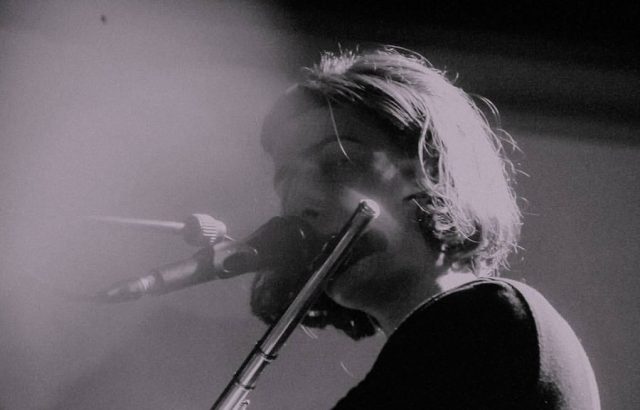
Violeta Azevedo is a Lisbon musician who builds expansive soundscapes with her processed flute. We had the chance to talk to her before her performance at the third Noite da Raposa about her solo work and her connection with her instrument, among other things.

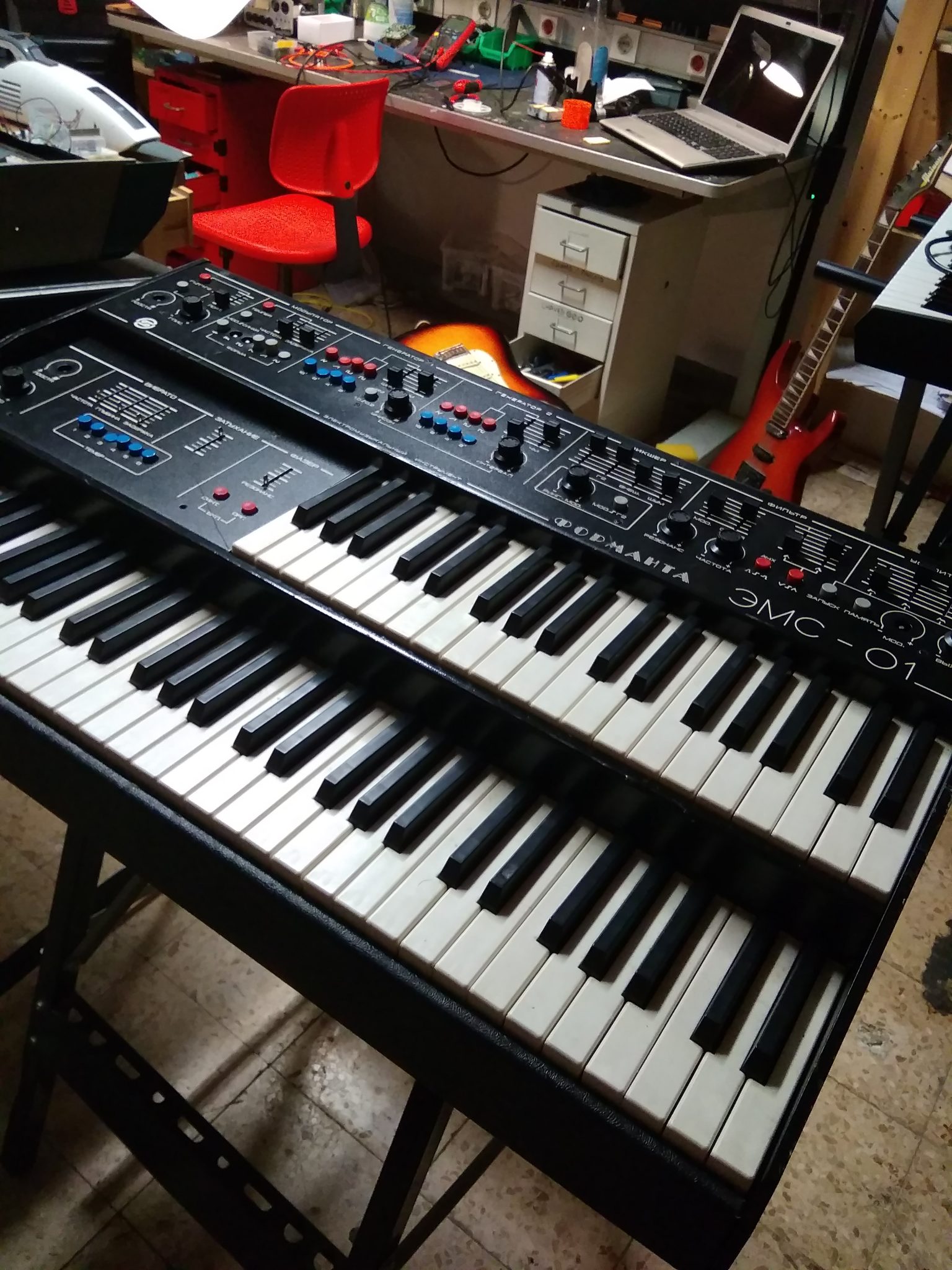
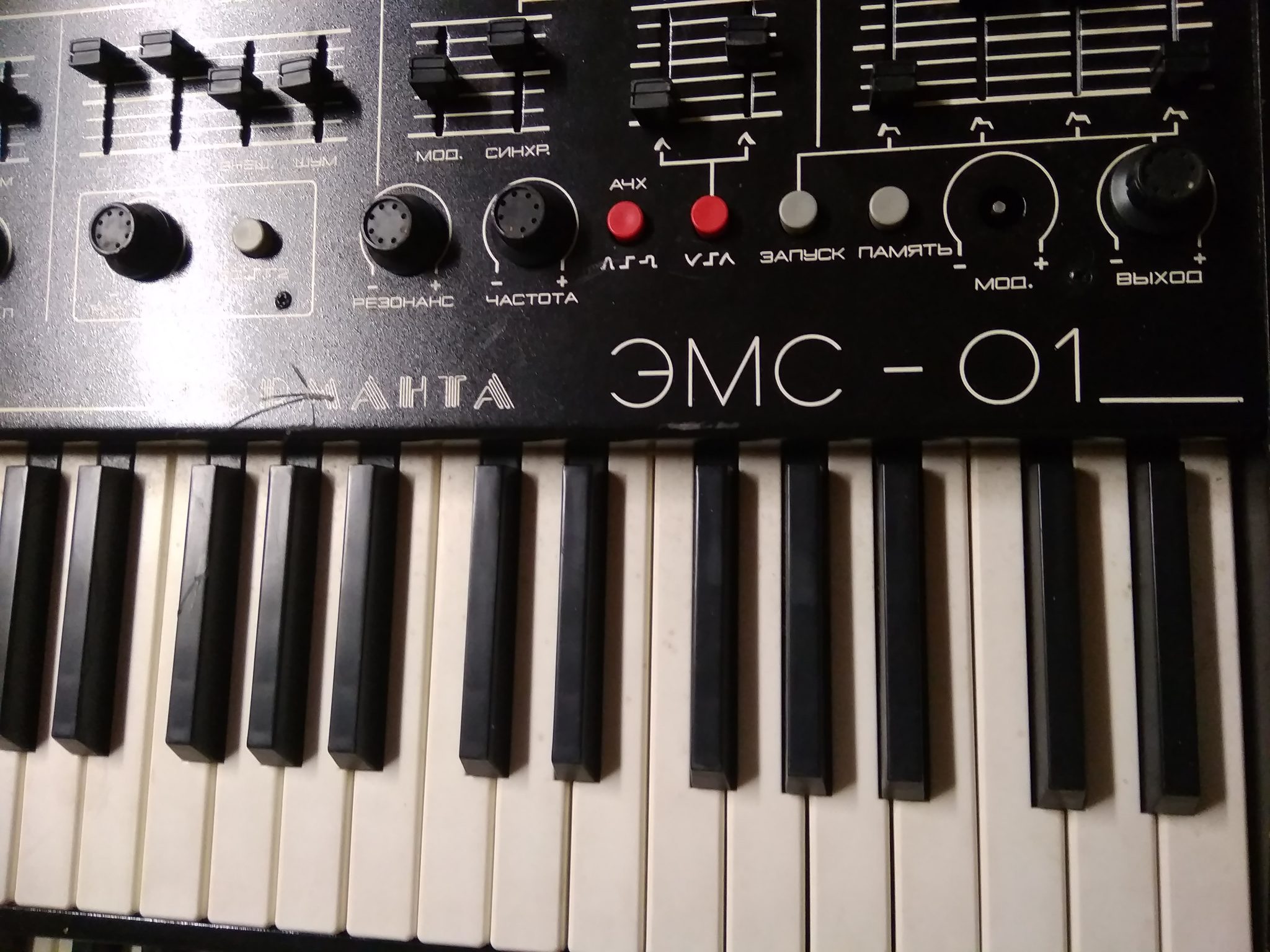
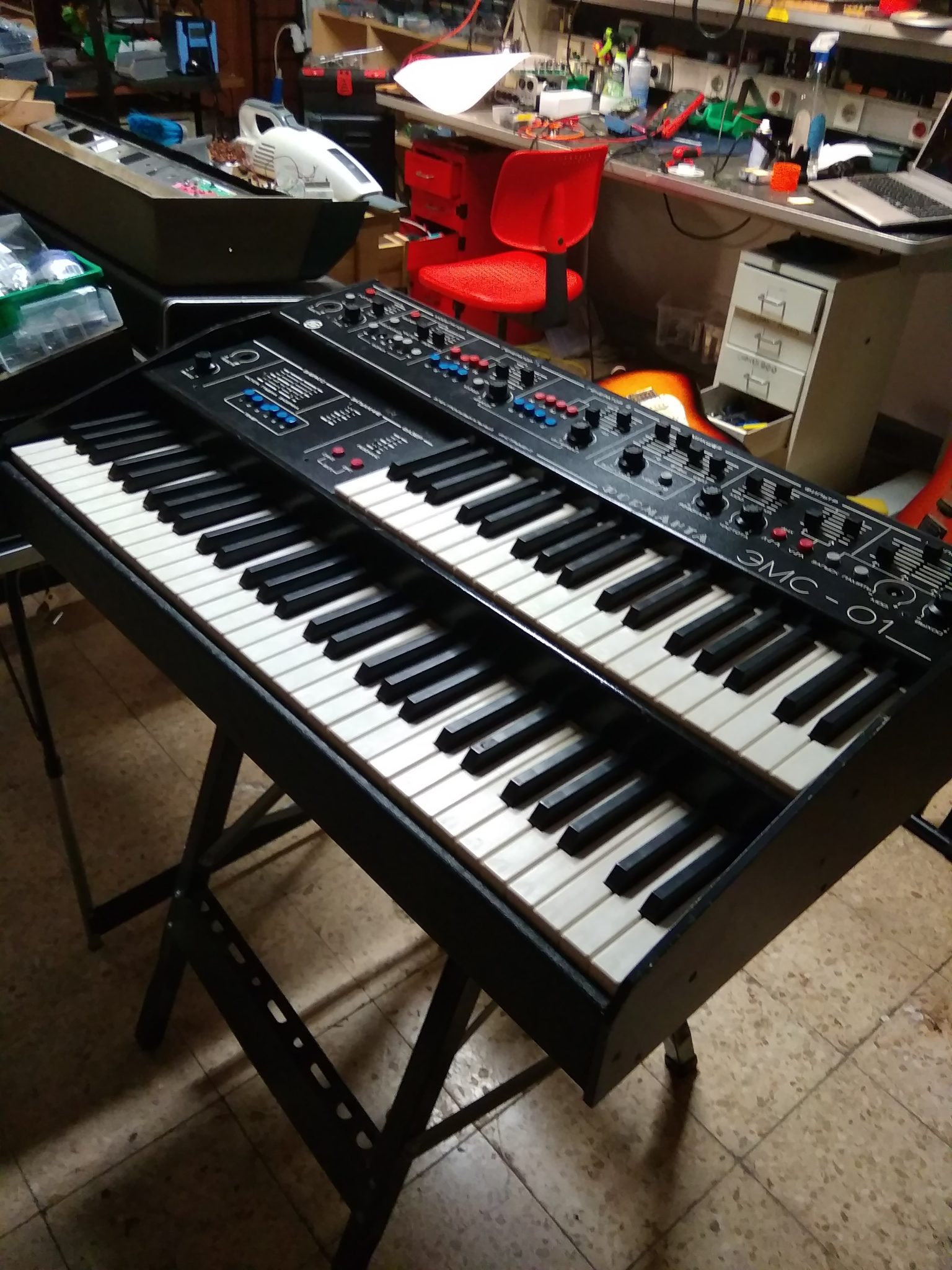
Photo of Violeta Azevedo by Ana Viotti. Photos of the Formanta EMS 01 courtesy of Violeta Azevedo.

You’re a part of various musical projects, including Jasmim, haraem and Savage Ohms. Can you tell us about the differences between your solo music and your other projects and the methods and inspiration behind it? Do you plan on recording any solo music in the near future?

Yes, I should record something this year, hopefully. I already have some recorded music, but I haven’t released anything yet. I think that playing solo frees me quite a bit to do what I want to do, I use a lot of pedals, more than in my other projects (even though I also have the freedom to do that there), but there it’s a different type of music. When I play by myself, this is what comes naturally, but with other people the interaction with them leads to different results.

Yes, I should record something this year, hopefully. I already have some recorded music, but I haven’t released anything yet. I think that playing solo frees me quite a bit to do what I want to do, I use a lot of pedals, more than in my other projects (even though I also have the freedom to do that there), but there it’s a different type of music. When I play by myself, this is what comes naturally, but with other people the interaction with them leads to different results.

Yeah, I played at Irreal, at Lounge, at Desterro and at Salgado’s birthday, two years ago…there’s been a few, and it’s been cool, it’s a nice way to improve as a musician and try different things.

Did any of those stand out for you?

The one at Irreal was my favourite so far, I felt at ease and the performance flowed the way I wanted it to from beginning to end, I was always in control and enjoying myself…it was really cool. I always inspire myself in the venue, I create the piece for the space where I’m playing.

I was about to ask you that – when you perform solo do you have an idea of what you’re going to do, or is it completely improvised?

It’s fifty fifty: I compose a basis for the performance, and I know which effects to use to get to the sound I want, but the performance itself is improvised based on that.

What draws you to the transverse flute as an instrument? Do you have any flute “heroes” that you particularly like?

Hmm…There’s a few flautists that I like, but I think that what inspires me in the flute is its sound and what I can achieve with it and the effects, and I also use my voice, which is really similar to the flute in a certain way…I have a hero, Delia Derbyshire, but she doesn’t play the flute…my interest in the flute is really more about its sound and texture. It’s the instrument I’m more comfortable with, and I can create more and more interesting textures when I play it.

How did you first start playing it? Did you study it at school or something like that?

My mother wanted me to learn an instrument and she gave me a list. I closed my eyes and pointed at the list and there it was, so I started learning it when I was 9. It was a classical education, which I hated, and I quit when I was around 15. Only years later, when I was about 20, did I start playing it again. At that time I was just improvising with it – I enjoy playing in a more “organized” way too, but before that I had never tried to improvise and make music on my own, I didn’t even know what actually enjoying playing the flute was like. Only after.

You work with Rui Antunes at Analog-Repair, which restores and repairs synthesizers and other electronic instruments and effects. What was the most interesting piece of material (instrument or otherwise) you’ve worked with over there?

Recently we’ve been repairing a synth that we bought, a Russian synth which was used for film music and it’s the best synthesizer I’ve used up to this day, it’s incredible, called Formanta EMS 01. It’s a big synthesizer, with an organ keyboard below and a mono synth part on top, with a filter like the one on the Polivoks but better, it can do similar sounds but also a million other things. A friend of ours (who had already found a Polivoks for us) found it and asked us if we wanted it – it was broken (as is usually the case), but we fixed it. But I love all kinds of analog synthesizers, they all are interesting in different ways.

Interview with Ernesto González (Bear Bones, Lay Low)

We spoke with Ernesto González (Bear Bones, Lay Low and other projects) before his performance at ADAO about his Portuguese tour, the Belgian and Venezuelan music scenes and much more. You can read it all below:

Photo courtesy of Pedro Roque – Eyes of Madness

Hi Ernesto, you’ve been touring Portugal for a little while now, what’s your experience been like so far?

Yeah, I’ve been to plenty of places from up north to here in Barreiro, and it’s been really special actually…I didn’t quite know what to expect, but it really exceeded my expectations in a way, I played in all types of venues every night, met some really wonderful and magical people, and the shows, for once, have been constantly pretty good, I’m always very critical of what I do so… This little tour has been like “Oh, this is nice, I’m not fucking up so much…” or maybe I’m fucking up in the right way, and the people have been enjoying it every night, even though what I understood from Portuguese crowds is that they’re more reserved. At least in a lot of places I played, since it was only me playing for the whole evening, people show up, they’re a bit quiet at first, and then depending on the situation they might get into it more and start dancing. But it’s funny, I always thought they weren’t enjoying it that much, but then at the end it was always quite well received. So yeah, this has been quite a memorable tour, thanks to Ya Ya Yeah Music.

Your music has a very deeply organic feel, despite your usage of electronic paraphernalia. Can you tell us a bit about Bear Bones, Lay Low’s history, inspiration and references?

I started this project maybe… eleven years ago or even more, I was sixteen back then. The first recordings I made came out with this name. This was supposed to be just a noise project - when I was sixteen I was starting to make a lot of recordings by myself inspired by the contemporary noise and psychedelic underground that was going down in the beginning of 2000, mainly stuff from the United States and Europe. It was pretty much when I arrived from Venezuela to Europe, to Belgium, that I got deep into this underground music, I noticed everybody was doing their own thing and this really inspired me, so I was like “okay, I’m going to do my own thing”, and I started exploring several different things, one was like a psychedelic folk project, the other one was supposed to be more like a noise guitar project…and Bear Bones was really like a harsh noise kind of project with simple stuff, and it was really the project that I liked the least, actually (laughs). But since it was the only thing I could do live, I ended up playing under that moniker, and everything I was making at that time kind of fused into what I do now, into the Bear Bones, Lay Low project.

So it just kept on evolving - the more I listen to different types of music, the more I start getting influenced by them, and I start kind of applying what I learned from other records and musicians into my sound. One important event was when a friend of mine brought over a Korg MS-10, an analogue synthesizer, and that really changed my life – I mean I’m not a synth freak but I love synthesizers, those electronic sounds…that was the turning point, and I started developing my music more instead of just sticking to noise and drone, which was what I was doing with Bear Bones pretty much until 2009 and 2010, and I started making music closer to like, Cosmic Music stuff… Listening to stuff like Cluster, and the first Tangerine Dream albums, all this German music, Conrad Schnitzler fucking blew my mind, still blows my mind, he’s one of the artists I admire the most.

Eventually I started playing with another friend of mine called Mike, and we started a band together called Tav Exotic and we started playing more like….Let’s say dance music, electronic stuff but with rhythm and I also started integrating that with Bear Bones, so now it’s a bit of a mix of cosmic, repetitive electronic music with heavy rhythms and kind of maximalist sound, trying to make sounds that are really huge…I’m really inspired by Skullflower and Sunroof, these are bands that still inspire me today…I mean it just evolved learning from records, listening to a lot, I’m always happy to discover new stuff… I don’t feel like I have anything particularly original, I just take things here and there and make a collage.

Over the years you’ve been a part of several projects, including Silvester Anfang, Steenkiste / Hellvet, and recently Tav Exotic (with Weird Dust), and released splits with many artists: what do you look for in these collaborations and how does the creative process differ from your own solo music?

I guess that when I start collaborating with people somehow it starts from an idea we have together. With Tav Exotic, Mike is also very influenced by Cosmic Music, we have very similar tastes, but the approach was to be maybe a little bit…less noisy, you know, we wanted to make more stuff with beats… Now that I think about it, in these collaborations and projects, it often ends up being what comes out naturally - when Mike and I play together we make this kind of stuff, we make sequenced, repetitive electronic dance music, then when I play with my friends from Jooklo Duo, Virginia and David (we have an abstract electronic project called YADER), what we do is electronic improvisation, so I see it more in terms of just getting to know the people, it’s more like a conversation that I can have with certain people. You don’t always use the same language with everyone, I guess you don’t speak with your grandparents the same way you speak with your buddies and it’s like that in these collaborations, it’s a dialogue and getting to know people, and what comes out is a natural extension of this communication, so while there might be precise ideas about a sound, everything that I’ve kind of been involved with has always been pretty, let’s say organic…

I’m always looking to make music with people and I figure that the best way is always when you’re just two people, maybe three…I mean, in Silvester Anfang we were so many that in the end, around 2012 (I joined the band in 2006), it started being difficult - we always ranged from six to eight, nine people and after a while everybody started kind of growing apart, but when you’re just two, you can really do wonderful things, it’s like a good couple (laughs)…

It’s hard to manage a big band especially because there’s always someone who has to take the lead, and not everyone is alright with that arrangement…but it’s a mirror of how society works, you can kind of draw a parallel line there, some people are more eager to take initiative to create a structure, other people are there to question that structure, other people have more of a background role, and everybody kind of finds their own place to make things work, but when you don’t know your own place and you start criticizing other people’s roles, that’s when things start to get dysfunctional and it just kind of breaks apart. What I’ve learned in that band is that’s very important to know your place, sometimes you’re the leader, sometimes you’re in the background, you just have to learn it.

Are there any specific artists you’d love to collaborate with?

Let’s see man…fuck, of course I’d love to jam with Matthew Bower, I love him, that would be amazing, to just play some guitar with that guy. Hmm… most of the people I’m looking forward to collaborate with are friends, you know, so other than these type of heroes I’ve always had, like Matthew Bower, Ben Chasny from Six Organs of Admittance… I feel more excited to meet new people I can establish a friendship with and make music with. Right now I’ve met some people that I’m quite excited to start things with, like this band from the UK called Guttersnipe, I don’t know if you’ve heard of them, they’re a really freak rock, crazy rock duo, a bit like Arab on Radar but more demented, and the guitarist, she’s become a really good friend of mine and we’re starting to collaborate and make music. It’s hard to think about this on the spot…maybe playing with Black Witchery would be cool as well, you know (laughs). I’m just kind of open to making music all the time with people, just getting together and jamming, and if it works…that’s what makes me excited.

You’ve been living in Brussels, Belgium for many years now, can you tell us about the city (and the country’s) music scene and how it welcomed you? Are there any good bands or musicians you want to recommend?

It has changed since I moved there, I feel like in Brussels the underground nowadays, at least the type of music I’m interested in and the type of places I go to, it’s grown…in large part thanks to the enormous amount of French people that come and live in Brussels that kind of give a lot of life to the underground there, I feel like if it wasn’t for them…there’s still the old cats that have always been doing stuff in the experimental underground, the free music underground - I like to call it that way because it’s just an open area for all types of music where the style’s not that important, but rather the initiative of making music by your own means.

So yeah, in the free music underground, there’s not that many authentically Belgian associations and organizations that make things happen, but thankfully there’s all these people from abroad making things, opening venues…but there are so many things I still have no idea about that are going on in Brussels, even after 15 years there, it’s full of surprises and that’s something that’s really cool about Belgium, it doesn’t seem that fun on the surface, you know, it looks like a gray, grainy place, but if you dig beneath all this stuff you find amazing things happening…

I can always recommend listening to Orphan Fairytale, she’s a great musician from Antwerp. She’s not playing that much but she still makes music and everybody should check out her albums because they’re so beautiful and unique, and she’s one of the big, important names in the Belgium underground, she’ll always be mentioned. Man, I was even at the Peekaboo Records in Lisboa and they had a record of hers. There’s also these French people living there, I don’t know for how long, but they’re good friends of mine, and they make stuff, one of them is called Loto Retina and he’s just this French genius kid, he’s like 24, 25, but he’s really advanced, making crazy digital abstract music, but with a lot of soul and a lot of chops, and he has his buddy, a French guy called Apulati Bien, he makes weird electronic music inspired by early jungle and southern hip hop in the states, but really mixed with some crazy Asmus Tietchens vibes…yeah the list goes on man, the guy’s girlfriend Victoria, she’s a great artist and sound artist, making fucking cool radio pieces, and you have some other guys who have a label called Third Type Tapes, and they just release beats and noise and make these crazy parties, they’re currently working on a sound system to be able to travel around and hopefully I can travel with them as well…in Gent there’s Kohn, who’s also an important figure in the Belgium electronic music, this guy has done so many different types of stuff…I mean I could just go on, it just comes up like that…you should check it out, you’ll be surprised to find the amount of stuff that goes on there.

I feel like the situation here in Portugal is sort of similar, if you’re not in the country you’re not familiar with all of the stuff that goes on here.

Yeah, the tour was fantastic, this is the last night, but one thing I was a bit bummed about was that I didn’t get to share the bill with Portuguese artists that often. Only in Porto - I played two shows there, a solo show and then a collaborative one with a percussionist, João Pais Filipe and Julius Gabriel, a German saxophonist who lives in Porto (editor’s note: the two make up the duo Paisiel) and we actually recorded it, the idea is to put it out, hopefully, but other than that and tonight I didn’t get to see any other Portuguese acts, and I know there’s a lot…so yeah, I’m kind of excited to see Ricardo (Martins) play the drums. And I hope that next time I come around I can explore more, because it seems like a really exciting scene, not only in the experimental music but even the DJ sphere seems to be pretty interesting here as well…

This is my first real time here, last time I came here was 5 years ago, I was touring with Tav Exotic, Orphan Fairytale and a few others, we did this tour together and we were like 6 or 7 people in a freaking crappy bus all the way from Belgium, we came here and played a couple of gigs in Caldas, Porto, Lisboa and a few other places… When you’re travelling with so many people you’re like a pack, you know, you’re a family, and now that I’m travelling by myself I can understand and learn more about the country. Next time I hope to dig even deeper.


What was the Venezuelan music scene like before you left? Do you keep in touch with other musicians there at all? How do you feel about the country’s current situation?

Well I left pretty young, at 15, so at the time I wasn’t really in any type of scene or anything like that, I had a little band and we played at school, parties or whatever. I didn’t get involved when I was there but then when I moved to Belgium and started releasing Bear Bones stuff and putting shit on Myspace there was this guy called Álvaro Partidas who was making noise music, harsh noise in Venezuela, so I immediately contacted him. I was 16 and he was like 30 at the time so when we met he was kind of like “man, you’re just like a kid man, what the fuck” because we talked online and we met when I used to go back to Venezuela in the summer a lot (I sadly haven’t been back there for 5 years). But since the moment we met we would do shows together, so I played a couple of shows in Venezuela and the most memorable ones were in this art gallery place called “Organización Nelsón Garrido”. This guy, Nelsón Garrido, was a photographer and did a lot of really gory pictures of organs and stuff like that, I think a lot of his material has been used for grindcore bands, but the place was wonderful and it was the only place where we could play noise music and people would actually enjoy it, because every time we played in bars, fuck man, people would get really pissed off and go “fuck off, this is not music, this is pollution”. I remember playing in sports bars and people would be like “what the fuck is going on” but somehow pissed off, it wasn’t music to them…

So yeah, these were my only experiments with the music scene in Venezuela. Álvaro is still there though, he still lives in Venezuela and we got in touch recently, we hadn’t talked in years… I hope he comes over to Europe and we can tour together, because he’s got another band over there, a noise trio with guitar…but you know, the situation now in Venezuela is so uncertain, chaotic and catastrophic that there’s really no time for this type of shit, people are busy with surviving, or they are leaving the country. I mean, all of my friends from my hometown left. I was the first to leave in early 2003, but then every year there would be someone leaving, and then someone else, and then last year all of them were gone - I don’t think I have a single buddy from my childhood that’s still living in my town. I have a family there, my grandma is there, my parents are there at the moment, so I keep in touch but I haven’t been there in five years…I think it’s time for me to go back, you know? Let’s see what happens with all the crazy stuff going on there.

What’s next for Bear Bones, Lay Low? Any new music on the horizon?

Always, but I’m really slow in recording and I’ve been playing a lot of shows…I’m always recording though and when I get something ready I’ll just send it to people who have asked me…but I think that right now as soon as I get home I really have to finish a split with Black Zone Myth Chant from France. He’s a good friend of mine, we’ve known each other since the days he was playing psychedelic guitar music as High Wolf, and now we finally get to do a split together after all these years.

I’ve also got an EP coming out with like a 15 minute track, with someone else doing a remix on the other side, it’s for a new label from these guys in Offenbach, they do parties called Hotel International, and they’re launching a new label called Ok Spirit. I also have to finish Tav Exotic stuff, when I come back home, but three days later I go on tour with the Jooklo Duo (you have to check them out, those guys are amazing), and we’ll do a residency in Rotterdam where they have a crazy synthesizer studio… I’ve also got a new band now called Carcass Identity, which is more techno, we’re going to start playing gigs…

So yeah, I’m doing stuff all the time, I’m not in a rush to put out records or do things, I think things come out when they have to happen, and I don’t see a point anymore in the age we live in to have this pressure of “you’re going on tour, you got to have a record” – we’re not in the 60s anymore, if I want to share music I can just put it online for free and it’ll get faster to people, so records for me have to be something that’s going to last - that’s the true purpose of records, not something to sell, but rather something you leave behind…records, especially vinyl, even if they get fucking wet and mouldy you can still kind of hear the music, only natural disasters can make it disappear, but digital information seems more fragile and like it can disappear just like that, though we need all of those things. So yeah, I’m in no rush, just doing things day by day.


Interview with Ricardo Martins

We had the opportunity to chat with Ricardo Martins before his performance at ADAO in February 9th, 2019 about his first solo work, "Furacão", as well as his past and future journeys in Portuguese and international music.

Photo courtesy of: Vera Marmelo)

“Furacão” is your solo debut, and the songs that make up the album were released one by one for a year by the London label Jeff Records. What was the process like, and what led you to this solo adventure after making music in bands for so many years?

It actually started in 2014, after some improvisational experiments which started here in Barreiro, interestingly enough, after a performance I had here (editor’s note: at OUT.FEST 2009). Afterwards I had the urge to create something on my own, but with so many bands and so much happening it was hard to do. When I came back from Barcelona (where I lived for a few years) I started playing with people here again, I was always making music and I always wanted to create, but sometimes people wouldn’t have as much free time as me, so sometimes I would end up in the studio for hours without sharing those moments of musical creation with others (which is more or less what I do, more than ‘playing’ – I never had that approach of playing on my own and practicing, I prefer to rehearse with other people every week). So then I started thinking about making music on my own, though at the same time I wasn’t sure if I would have the discipline to make an album – I think I’d still be finishing it up now if I hadn’t found this way to “trick” myself: I’d make a song a month, put them out, and by the end of the year I had a 12 inch – that’s more or less what happened. The record then took a while longer to be released, but that’s how it happened, more or less. And I ended up discovering other things I like in this solo approach to music making and maybe it showed me I can create music on my own with a discipline I thought I didn’t have.

How did this association with Jeff come about?

The guys at Jeff are friends of mine, they had this project and I played at some concerts they organized in London, so when I had this idea they liked it and wanted to be involved – not only by releasing it but also by writing the texts that came out with the songs every month. We became a team there as well, which was what I wanted, to not feel isolated – even though it was a solo thing I always wanted to work with other people.

You’ve been making music publicly for 15 years now – did you see yourself where you are today 15 years ago? What did you imagine the Portuguese music scene would be like?

I don’t think I imagined anything… (laughs) For me that was the time when you want to make music, you want to learn, you want to do more…and I never felt satisfied with anything, I wanted to have more and different bands, explore new musical languages… That was it for me, there was no objective, but I knew that with the way I was feeling music at the time that I wouldn’t be able to give it up for anything else. But I also thought I’d have two interests going strong at the same time, because I also feel that I can’t just make music, I get too deep inside my head…so I discovered graphic design, and this way I have two interests which balance each other.

You are or were a part of many great bands in Portugal: Lobster, Adorno, I Had Plans, Cangarra, Jibóia, Pop Dell'Arte, Papaya, Bruxas / Cobras... Were there any moments with those bands that left a particular impression on you?

There are a lot of moments – above all I only make music with people I like, friends or people whose work I admire and that I challenge to make something – it all starts there. The tours were really important to me and I think they taught me a lot, there was a time we were going on two, three tours a year, and that was really demanding…it’s hard to specify a moment or a phase, though. I think the beginning of any project is beautiful, because you’re starting out and discovering things, you have that innocence, you make lots of mistakes…sometimes I miss those errors, looking for something and finding out it’s not there, all of that.

What’s next for you, musically speaking? Do you intend to make more solo music in the future?

There’s a 7 inch coming out now, maybe in May, and it’s supposed to be the opposite of Furacão, which was based on drums and idiophones. I wasn’t using everything I’m using now – pitch shifters, delays, modular and regular synths…I’ve been feeling the urge to follow that path. That’s what’s coming now – it’s all written, all I need is to record it. I’m also writing a piece for eight drum sets, which will be performed at a festival in June. Writing for eight performers was also something I’ve been meaning to do for a long time, and I hope more projects like that come along, it’s something that gets me really excited. And I wanted to have more solo projects, explore things I’m not that comfortable with….I think that working on your own is sort of like that, for me it’s a panic inducing experience, when I’m playing with a band I feel at ease, you’re in the back, you’re protected in a sense, but when I play solo it’s scary, I don’t sleep the days before a concert…I’ve got the full package. But on the other hand when it’s over you feel like you overcame or conquered something that’s yours alone…even though I never want to stop playing in bands, I want to keep on doing more and different stuff. I was talking to a friend of mine that I played with in Barcelona and he told me something which I thought was an exaggeration, but which was: “The only thing worse than practicing and playing on your own is practicing and playing with other people”, and even though I wouldn’t put it like that I feel that while playing with others is some kind of ‘monster’, because you have tons of things to understand and learn, it’s a demanding process of sharing, and playing solo is a different kind of ‘monster’, it’s you in your head. It’s a good struggle but a struggle nonetheless.

You talked about using synthesizers in your next record – how do you integrate them, as well as other sound sources, with your work as a drummer?

I’m always playing the drums, but I can be playing other things at the same time. This all began with me using an SP404 a sampler that I used to enter a different sound world while I played, to play an interesting sub-bass sound or anything else, and that helped me thing differently, play more and experiment with keys. I really think it’s time to try to do that more and more, and these solo concerts are also good for that, for trying out new things, they end up being a laboratory of sorts. I’m more interested in going through that experienced than in presenting something that super polished and finished. I’ve been having that urge to explore, and there’s something worth noting – I started making music for theatre two, three years ago, and at first I usually started with the drums, but then I started producing recorded music that would later be triggered live, and that had plenty of synthesizers, and arrangements for other instruments besides the drums, so I was already in the mood to explore that in my solo music.