Interview with Sarnadas (OUT.FEST 2021 (II))

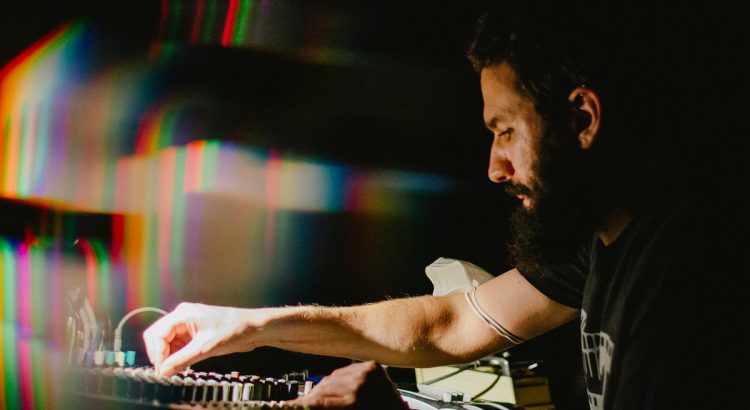
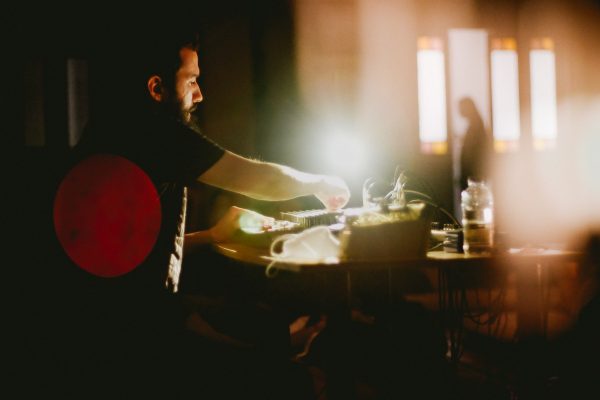
João Sarnadas, aka Coelho Radioactivo, was the man in charge of opening the last day of the second moment of OUT.FEST 2021, presenting a deep listening experience intimately connected to that of his debut work under his own name, the two double albums "The Hum" & "The Humm". At SDUB "Os Franceses" we were able to listen to two hours of electronic improvisation rich in harmony and texture in the perfect conditions for doing so: lying down, eyes closed, absorbing the sound.

We also had the chance to speak with the artist before and after the concert, and it is the compiled result of those interviews we present to you below.

Interview by Tiago Franco. Photos by Nuno Bernardo and Pedro Roque (in black and white).


What was your first contact with this kind of long-form, minimal music?

Hi hi. I always loved long music, not necessarily in terms of its duration but more of its composition, and the use of continuous sounds, for many reasons, including the fact that often there’s some sort of drama associated with long music like that and that drama is something I relate to easily. Thinking about it on the spot, I’d say my first contacts with long-form minimal music happened with artists who aren’t particularly “durational” or minimal, the first pieces I recall are “Back to Schinzo” by Pascal Comelade and “Stranger Intro” by Bill Frisell (the intro for a Marianne Faithfull album) which were songs I heard a lot when I was a kid. Pascal is one of my favourite musicians ever, and fortunately he has enough albums to be able to constantly hear new things from him, I only discovered his first, more experimental albums around 5 years ago. “Stranger Intro” is a 30 second loop that I heard on repeat, and I decided to make a version of it for this album, although when I made it I didn’t necessarily know it would become part of an album, I only wanted to try playing it in order to listen to what a version with more than 30 seconds could sound like, and it ended up turning into D1 M Bombarda Transmission. When it comes to more intellectual stuff, I think the first long-form minimal musician I got into was La Monte Young, then maybe Terry Riley’s concert with Don Cherry in Köln. But I don’t know if these were my inspiration to make this album, especially because this long form comes more from the way I play than from a prior decision to do so. Those are obviously musicians I enjoy, so they ended up influencing my melodies and my thoughts, but I think the music is always the result of a much wider range of influences.


Could you tell me a bit about the equipment you use on this album? It was built by Inês Castanheira, who runs a DIY synthesizer workshop. Was it a commission or was it given to you with the three oscilators?

Yes, the synthesizer I used on this album and the one I now use live is a simple one, with three oscillators and three on/off switches, made by Inês Castanheira. I’m fortunate enough to share not only my life but also my house with Inês, so I have easy access to the things she builds, and this one in particular is one of the first she built, because she was starting to explore synthesizer-building at the time, and that’s precisely the reason why it’s so simple. We started using this synth and another one in a project we both have called Well, and I eventually started using it in collective pieces by Favela Discos, such as the “Desilusão Óptica” piece. That was the background I had in developing the approach to the material I created for this album, based on the use of this synthesizer, the mixer, loops and other effects pedals.


 You recorded this album in two days, which resulted in 8 hours of recordings, and it took you three years to mix it down to two albums of two hours each. What kind of methods did you use to bring it down to that size and what kind of challenges did you encounter in the cutting room?

Well, at the time when I did that recording session, I didn’t really have the idea of making an album out of it. As I said previously, I simply felt that I had arrived at a different way of playing from what I did as Coelho Radioactivo, for instance, and that I wanted to record something using that “language”. I actually feel like The Hum has something of Coelho Radioactive in it, I think that the melodies have something to do with that universe, as does the use of loops, which was something I did often both live and when playing by myself at home. At the time I had Nuno Loureiro’s mixer at my house, because I had used it at a Desilusão Óptica concert, and so I took the chance and started recording for two days, which as you mentioned resulted in 8 hours of music. It was actually more, around 11 hours, but I usually don’t count those hours because they weren’t that great to begin with. Basically, the biggest challenge was to understand the results I came up with, which led to two problems – first to reduce the music to a more acceptable length to make them understandable as “songs”, and second to figure out what those songs were, if they’d lead to three albums, to one, to two…which way to order them made sense…Eventually I managed to simplify it into two albums, one which was more “drone” and a more “ambient” one, or a more “atonal” and a more “melodic” one, a “daytime” album and a “nightime” album, but over those three years I started grouping the music with really quite different concepts, which probably aren’t that clear but which helped me understand what these songs were.


I read somewhere that you took cues from “the unique harmony of each city you lived in”, could you tell me a bit about that? Do you see any crossover between your music and architecture?

Well, in fact, even through it was inspired by things I feel about the record, the process, and my thoughts when I was making it, that’s a bit of press mumbo-jumbo. I’m always torn between conceptualizing the music I make or not, I usually don’t make things following a pre-defined concept, the only thing I’m interested when I’m recording is my intuition, and if I’m enjoying the music I’m creating. However, on the other hand, I’m interested in thinking about sound, and it’s something I do on my day-to-day for various reasons, either simply because of reading things about music and sound, or due to communicating about what I do solo or with the people I work with on a day to day basis – for instance, with the rest of the guys at Favela Discos when we develop collective pieces – we obviously need to speak about what we want to do, and either you want to conceptualize what you do or not you always end up having some thoughts about what you are doing. In that sense, something I’m interested in, for instance, is the relationship between ambiguity and deep listening. In the same way you can, with deep listening, discover melodies, rhythms, tones, etc in the soundscapes of a city, you can also discover new sound layers in the kind of music I make, in between the more obvious melodies you can discover other melodies, like you can distinguish them in the middle of the mass of sound and noise. In that sense, I think the relationship with the city soundscapes is that one, discovering some musical logic in the midst of the mass of sound we’re exposed to, between cars, fans and turbines, those noisy air conditioning things, and all the other things that make up the sound floor and which we sometimes don’t even notice.


The global phenomenon of ‘The Hum’, with tales of people who are almost chased by ultra-low frequencies in residential or industrial zones, is considered an unpleasant sound, one that leads to insomnia and headaches. Those are the last things I’d mention when describing your music. Does the album try to redeem this type of sound and put it in a different context, in a way?

Well, first of all thanks for the compliment. Regarding The Hum phenomenon, I think it’s unpleasant because it’s a sound that is an undesired and permanent intruder, but maybe that sound would be acceptable in an experimental music context (laughs). My idea isn’t so much to redeem the phenomenon, I simply think I adopted the name as a more encompassing term, like I said above, I think my The Hum is more about the sound of cities which isn’t immediately perceptible to us. This phenomenon isn’t audible to everyone, apparently some people are more susceptible to it than others. So, I wasn’t interested in talking about a violent, people-chasing sound, but simply about a sound which we only perceive when we become aware of its existence, or something like that. I’m interested in the idea, but not so much in the text-book definition of the concept, and like the music, one of the main reasons I chose the name was due to my intuition, I liked the mystic aspect of the idea and it looked like a cool name. Besides, I also used this theme and title for a comic book released by O Panda Gordo in 2016 or 2017, and at the time I thought it would be cool to connect the two things because they work on the same idea in very different ways.


How different is the album and the music when you play it live? Did you make any adjustments for the OUT.FEST concert?

Well, I’m not actually playing the music on the album, what I’m doing is using the same means and techniques to create new music. The album was created through improvisation, which is what I do live, although lately I’ve been bringing along some pre-recorded loops so it isn’t as boring. During rehearsals I tried to replicate some of the music on the album, but I wasn’t a fan of the result, since I was concerned with make the music sound like the album it ended up sounding like a cheap copy of it, which both wasn’t identical to it or as interesting as it. So I thought the best thing to do was to simply use the techniques I used on the album to create something new, which isn’t what’s on the record but is a part of it, in a way. For OUT.FEST, the only special thing I did was to select some pre-recorded loops, but the concert preparation was all very chaotic because it was the first time I used the scenography and it was all a bit last minute. I think the biggest adjustment I made for this concert was to use the “city” prop, or whatever you want to call it, which was something I wanted to do since the beginning but hadn’t had a chance to, and I was very happy with the result.


Still OUT.FEST

It's been almost two months, and we're now totally focused on OUT.FEST 2022 - the 18th edition of the festival, which is thus nearly coming of age - but this week we've released a mini-documentary which recaps the events of the second half of 2021's edition of OUT.FEST, which took place in October.

Created by Mário Jerónimo Negrão from interviews, video and sound gathered by the OUT.FEST team with the help of many collaborators and friends (for which we are thankful), it serves as a way to celebrate and remember six days of intensive listening, of long awaited reunions, and new and long-lasting discoveries.

You can find it here

Meanwhile, despite the end of the year drawing closer, we still have many good things in store for you all - so stay tuned for news early next week.

Interview with Vasco Alves (OUT.FEST 2021)

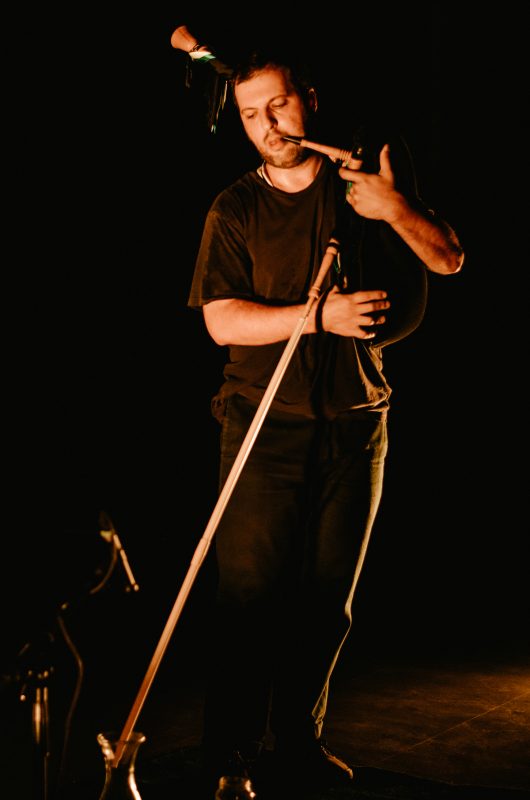
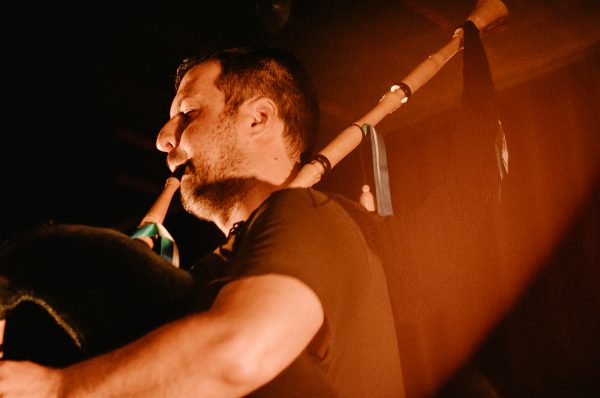
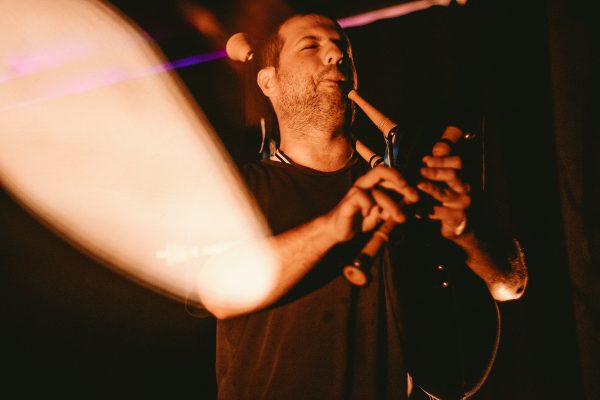
In the week prior to the start of the October moment of OUT.FEST 2021, we had the chance to talk to Vasco Alves - bagpiper for 'Os Belenenses' football club, member of VA AA LR and heroic investigator of acoustical phenomena and the materiality of sound, whose trajectory's been discreet but continuously fascinating, resorting to numerous sound sources and methodologies including synthesis and amplification techniques, tape recorders, signal processing and – more recently – bagpipes.


Can you tell me a bit about your experience with the bagpipes? How did you start playing them and how did your relationship with the instrument develop over time?

I started learning the bagpipes in 2014, at the Lisbon Galician Centre, and during the first years I had a traditional learning experience, but I always wanted to use the instrument in a less conventional, more exploratory way, closer to the themes I’m interested in, and that’s something I was only able to do a few years after I started playing the bagpipes. I think it was about three years ago, maybe in 2018, I started preparing a few pieces which, although they also include some electronic material, work on acoustic phenomena and psychoacoustics above all. I always try to explore some kind of effect within that field.

And what drove you to this instrument specifically? Because in 2014 you were already active in making music, right?

Yes, I had been playing for quite some time by then...I had two experiences which were somewhat surprising, so much so that when they occurred I didn’t even imagine I’d be learning an instrument one day. One was a concert by Paul Dunmall in London - he’s more associated with jazz and even improv as a saxophone player, but he has a personal collection of bagpipes from around the world. Me and a friend invited him to play at a concert we were organizing when I lived there, and he did a performance where he played with several bagpipes throughout, and there were some amazing moments in there that I wasn’t expecting, even in terms of the sound material...when the bagpipes were amplified, if you closed your eyes you could imagine it was a laptop concert, a computer music concert...well, there were some really surprising elements, and then when I returned to Portugal in 2014, I ended up attending one or two concerts where the instrument was also used, although outside this context, but then I decided to learn it, in a somewhat spontaneous way. And that was it, I liked it and kept doing it and at this point it’s possibly the instrument I work with the most, even though I also explore similar themes when I work with electronics.

On that topic, when did you become interested in electroacoustic music? Was there a specific moment when you discovered that kind of music and thought that was what you wanted to explore?

I don’t know if I can name a specific moment, I think that it’s probably related to the music I heard during my adolescence, which led me to have some interest in exploring, in following the more exploratory path in music, the less conventional one, so to speak. And in my university years, if I’m not mistaken, I learned how to make some contact microphones and some other small things (I think my first recordings were with that material actually, even if they were done in a very naïve and intuitive way), and well, things evolved from there, I kept being interested in instrument building, in exploring materials…Obviously, the things I’m interested in nowadays aren’t necessarily the ones I was interested in at the time, but it’s been evolving, going through several phases, although I think there’s something that unites them.

So what was the music you heard as a teenager that led you in that direction?

Well…in my early teens I listened to a lot of Sonic Youth (and all the musical scene they were a part of), that’s possibly one of the first times I saw instruments being used in a less conventional way. And going back to your previous question, there was actually a moment when I discovered Christian Marclay’s work, I saw one of his exhibits as well as some concerts and tapes, and I think that moment marked me somehow, also because of the way he used the materials and the sound that was generated by the things he built, the processes he explored and which were part of his pieces, all of those were very influential to me at the time. Soon after I discovered the great master, Alvin Lucier. There are many other things which have influenced me since, like the work of Rafael Toral, and Sei Miguel…But well, it becomes difficult to name specific influences, since I’ve been influenced by so many things.

The relationship I see between all of those musicians is in part related to what Eddie Prévost says and tries to teach others, which is to see an instrument as something to play “outside the box”, that you should be something of an explorer and improviser with instruments. On your website I saw the radio you played, and it looked familiar – were you at Eddie Prévost’s workshop [at OUT.FEST 2015]?

Yeah, I also used to take that radio to the workshops he organized in London, which were a weekly improvisation meet-up, every Friday night in a church basement, where everyone could show up and join, and for about two years I went there regularly, so that’s why I also participated in the Barreiro workshop that OUT.RA organized.

And what did you learn from those workshops? How did they help you develop your work?

I think those workshops had quite the impact on me at the time, but nowadays I don’t feel as close to or interested in free improvisation, which is basically what Eddie Prévost is focused on. Those workshops were an amazing thing for me at the time, both on a personal and social level, there was a dynamic which to me was new and quite exciting, the way the workshops took place and how people played there… there were small rules, but there was a lot of openness and fluidity and no-one ever told you what you should or should not do, and that fascinated me for a while. Meanwhile I think it lost a bit of…I don’t know if I became less naïve about that idea, or if I simply became more interested in other ways, other things…but I also experienced some incredible moments, there, with really great musicians, and I think that at a certain point, towards the end of the time I participated in those workshops, I would go there more to watch one or two people (like Seymour Wright) whose work I was interested in and fascinated by, and the five or ten minutes I’d hear them play would make the hours I’d spend there worth it…


You were saying that your interests started to change – can you tell me which part of music interests you the most right now?

Well, about free improvisation: I think that’s not the core of what I’m interested in nowadays. My work, be it electronic or acoustic, always involved a lot of volatility and so improvisation is still very important to me, but I like to work on themes, be them things that came from working with an instrument (in the wider sense), from the “life” that volatility and instability can generate, but also spatial themes, of the connection between the instrument and the space, and trying to somehow find a way to create work which fits in this context. Improvisation is obviously always present, because I have structures but I don’t define what I do exactly, there’s space for me to react to things in the way that seems the most appropriate in the moment. The bagpipes themselves, being such a rough, primitive instrument in a way, and maybe the instrument’s limitations themselves, I think they’re a good way to explore this kind of ideas, because in a way I feel like that simplicity and rawness then allow others parts to come to the fore, to have some importance, be heard and perceptible, and the bagpipes end up being the trigger for those events, in a sense… trigger para esses eventos….

That brings me to another question – I notice that in your music, especially your most recent work, there’s a certain duality, between folklore, some very primordial stuff, and a more technologic and machine-like angle. I don’t know if that’s something you agree with…

It’s certainly not intentional. The tools I use often tend to define what I do. The bagpipes fell into my lap so to speak, like other things I’ve been using, and my perspective has been more like: “What can I do with this instrument, what does it give me, how can I apply it to what I’m interested in doing sonically?” In the concert I’ll be presenting at OUT.FEST, the computer is simply generating a frequency, a sawtooth wave, which has a very similar sound to the bagpipes, it ends up being almost like a second player, which then generates this clash of frequencies…It’s a bit hard to define, but like I mentioned I’m interested in exploring instabilities in the processes and mechanisms I build, and I try to do it with the bagpipes as well. But like I said it’s not a conscious decision, I like to work with rawness, I’m interested in a certain dryness in things and materials, and I move towards musical construction from there, to develop the work I do, but in fact, to me these are all things that fit mentally in the same place: to use the bagpipes or a synthesizer or a circuit I built or a radio, the ends to me are the same, there is no concept behind that.

You use the instruments because you really like their sound…

Yes, and because I’m interested in the rawness and brutality of things like white noise, or the sound of the bagpipes, which is also quite simple, in the simplicity in working with electronics, I’m really fond of all this…let’s say that the notion of economy, of doing a lot with meagre means is something I’m really interested in and that I strive for in the processes and things I create.

I wanted to ask you about the work you’ll be presenting at OUT.FEST, “Gaita Contra Computador” (“Pipes vs Computer”). The title calls to mind the idea of opposition, of combat, almost…You mentioned there’s a computer tone that’s really close to that of the bagpipes, can you tell us a bit more about that work of yours?

“Gaita Contra Computador” is the title of a CD I released last year, and yes, the work is based on the creation of a few pieces which are relatively short, some of which influenced the name of the album and which involve the bagpipes used without amplification in a space, while the computer is generating a frequency I programmed which generates tones that are very similar to those of the bagpipes, and the idea is that when frequencies cross in the space they create a some acoustic effects (like pulses, for instance)…My intention is to give listeners an impression that there’s a new sound emerging at a certain point, an union between the two sounds where eventually you stop being able to distinguish one from the other…but overall I’m interested in knowing how sounds cross in the space, it’s like I have another person playing with me there, but when you explore frequencies which are very, very close and you move around in the space there are small effects that come to being, in the acoustic space in this case, the concert venue.

Then I might present some acoustic pieces as well, without the computer, where I explore the bagpipes and their physical limits, I try to pull the pick to sound registers which aren’t exactly the ones the instrument is meant to reach, looking for flaws and exploring those flaws and that instability. Then there’s another piece which involves adding a tube to the bagpipes and pointing that frequency to a few jars on the ground, and explore the jars’ resonating frequency – when you bring the sound of the bagpipes closed to the jars a new frequency emerges, and it’s a piece focused on that interaction…and my concert will explore these ideas – they are pieces which somewhat resemble what’s going on in the record but which are in constant evolution, every time I present or rehearse them they are adjusted and mutate over time.


And the space itself influences the way the pieces sound like – I remember, for instance, having had Erwan Keravec play in Barreiro, and he was very happy with the natural reverberation and amplification of the church he played in…How has your experience been like in playing in different spaces, do you also feel like it has had a big impact in the way you play?

Of course, it always does, not only in acoustic pieces but also in the ones I use the computer in…the resonance of the space tends to make the pieces sound a bit better, I think, they might not work as well in a very dry space…I could be forced to think of something else, but yes, the acoustics of the space are really important, it’s something I always have to keep in mind every time I play, and in this case I’ve already been to the library [the Municipal Library of Barreiro, where the show took place], to check it out and try playing there, and that ends up influencing what I’ll present somewhat…

You were telling us how you’re really interested in intensity a while back. I wanted to ask you about “Estrada Longa” [Long Road] – I was listening to it a few days ago and felt that it had something close to motorik, not so much in the rhythmic sense of krautrock, but as a certain propulsion and trance, not in an intense way, but conveying motion, and the bike ride…Which is what inspired “Estrada Longa”, your trip on the N2 on a bike in the middle of the pandemic, right? Can you tell us a little about your trip, and how that influenced the record?

Yeah, that was it. I made the trip on my own on a bicycle, and at the time I hadn’t planned to make anything out of it, I simply started riding and seeing tonnes of place names that I liked, and so I decided on the first day to start recording the names of the places I passed through. Almost all of them, although I didn’t do it constantly – first I’d pass through a few, record it on my phone, then I’d go a little further and record some more, and by the end of the trip I had almost 150 place names recorded, from Trás-os-Montes to the Algarve.

Then I spent some time thinking about how to use that material. Those were phone recordings, and often I was pedalling as I recorded, so even though I thought they were interesting I couldn’t quite get them to fit, and so I concluded that the raw material wouldn’t be as interesting (even though I find that aspect interesting as well). What I ended up doing was to grab a pair of synthesizers I had at home and which I use often and which basically allow you to create a sort of patterns with a lot of instability and volatility due to the way they are connected, there’s a cyclical aspect to it, but non-linear in a fashion, and I thought that the two things could be joined, so I created other patterns, one for each day of my trip, and I re-recorded the names of the places I passed through each day.

And that’s how the record came to be – as you mentioned, there’s that cyclical aspect of the synthesizer, and I wanted to get a sense of monotony across as well, I was interested in that idea of long days, of never-ending but constantly mutating roads…that’s how the pieces emerged and they had that final result, the album. I’m not sure if it makes sense to follow up with it, I think that work ended there, with that piece, which sometimes I think could have been longer: instead of 50 minutes it should be four hours long, but that’s how it ended up like…


The last question might be a bit of a silly one, but: how did you become the piper for Belenenses [a football club based in Belém, Lisbon]?

(laughs) My connection with Belenenses comes from my family, my grandfather and great-grandfather were from Belém, I’m a supporter since I was born, etc…The club was recently relegated to the last division, because of the conflicts with B-SAD, and the first time they played after that I decided to take the pipes with me. I had already spoken with some friends who were connected to the supporter group, and I started playing the club’s anthem, everyone started singing in the stadium, and at the end of the day there were already videos on YouTube connecting that moment with an old tradition of the twenties, the Belenenses’ fifteen minutes – supposedly the club made a series of comebacks in really important games that year, including a famous one against Benfica. And so for many years the supporters would make a lot of noise in the last fifteen minutes, I heard that with whistles and pans, and someone connected my playing to that tradition, so now during games, in the last 15 minutes, I play the anthem and some other supporter group (the Fúria Azul) songs, and it became something regular in the games. Now I feel that I have this responsibility, so every Sunday I’m at the stadium with the bagpipes, there’s two of us playing them right now actually…so yeah, that’s where the bagpipes-Belenenses connection came from.

That’s really cool. You weren’t aware of that tradition yourself, were you?

I did, my grandfather told me as a child, but it wasn’t with the bagpipe you know, he just said that they used to make a lot of noise in the stands, or they’d play a whistle three times, but meanwhile that completely died out, there’s even books in the 60s of people connected to the club who mention that players didn’t know what the Belenenses’ fifteen minutes were anymore…and that was in the 60s, in the 90s I’d still hear a few whistles, but it was practically forgotten, and now it has some meaning again, it’s funny.

Interview by Tiago Franco and Diogo Carneiro. Pictures by Pedro Roque (the first one) and Nuno Bernardo (the remaining).


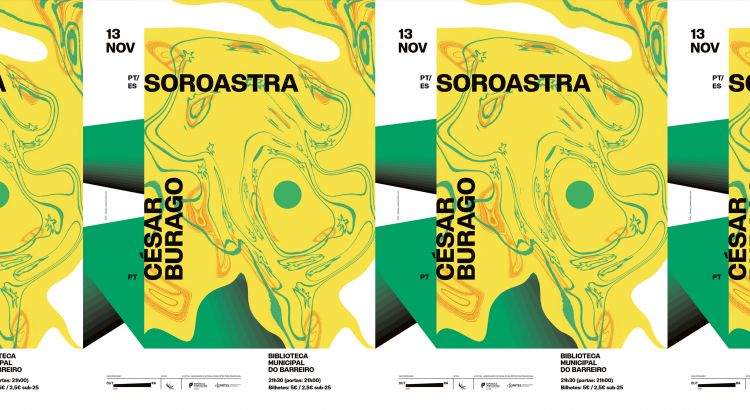
Our concerts are back: Soroastra and César Burago at the Municipal Library

After a long and intense OUT.FEST, we're back to our regular programming with brand new cosmic music from the Soroastra duo (made up of Afonso Simões and Spain's Borja Caro), in one of the first presentations of their wonderful new album "Olimpíadas de Pensamentos Acelerados", as well as the always unique César Burago in a solo presentation armed with small percussive instruments, finally returning to Barreiro after his originally planned show in the spring of 2020 had to be cancelled.
These concerts will take place in the Auditorium of the Barreiro Municipal Library on Saturday, November 13th, starting at 21:30. Tickets, priced at the usual 5€ (2.5 for under 25 yrs old) can already be purchased via outra.bol.pt

OUT.FEST 2021 second moment: full programme announced, tickets on sale

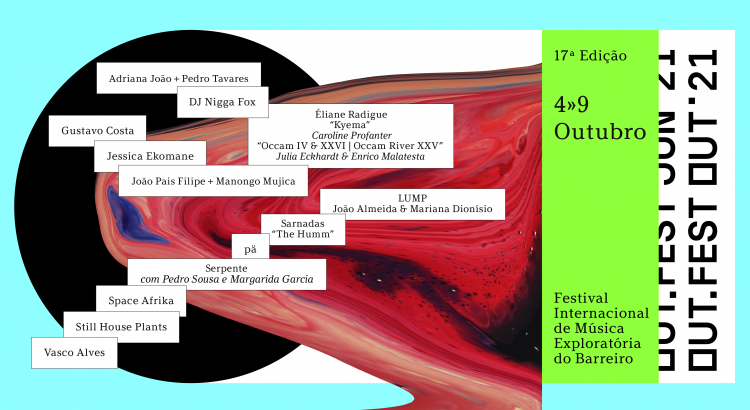
Here's the full programme for OUT.FEST 2021's second moment, back across several venues in Barreiro from the 4th to the 9th October.

After a first moment in June, the 17th OUT.FEST returns and concludes in its usual October dates, with 14 new opportunities to witness, in the flesh, some of the most important music of these times.

One of October's highlights is the continuing of the REMAIIN parallel programme, promoting european experimental music's roots in other world cultures.

In this scope we bring you music by the historical french composer ÉLIANE RADIGUE (one diffused/spacialized electronic piece as well as the live interpretation of recent work, one of which a world premiére), but also the portuguese debut of french-born Berlin resident JESSICA EKOMANE, as well as a first public collaboration between JOÃO PAIS FILIPE and MANONGO MUJICA, a peruvian composer and percussionist connected to the first avant-garde waves in 20th century South America.

Tickets are now available (both global passes and day tickets), but keep in mind that several free admission events require registration - read the programme carefully.

SONICA EKRANO - Our new film festival begins this Thursday

This next Friday marks the beginning of our new festival: SONICA EKRANO - Documentary film & the musical fringes, which will bring to Barreiro and Moita (Baixa da Banheira, more specifically) thirteen excellent documentaries concerning underground and unconventional musical figures and movements shown over ten days.

The festival will begin with two national premieres: "Acid Mothers Reynols: Live and Beyond", by Argentinian director Alejandro Maly will be shown in the opening session, presenting the fascinating encounter between Japanese band Acid Mothers Temple (who were present at OUT.FEST in an unforgettable concert in 2016) and the Argentinian Reynols (who have have Alan Courtis among their ranks, an extraordinary musician whom we've hosted in Barreiro for three times now for his work with Associação Nós). Then, on Friday, "Voice of the Eagle: The enigma of Robbie Basho" brings the guitarist's history to the big screen, portraying this North-American musician, composer and mystic, one of the great figures of the American fingerpicked guitar tradition alongside John Fahey. 

Tickets for the festival are already on sale online and on the usual participating stores, such as Fnac, Worten and CTT.

September begins with CAVERNANCIA at the Baía do Tejo

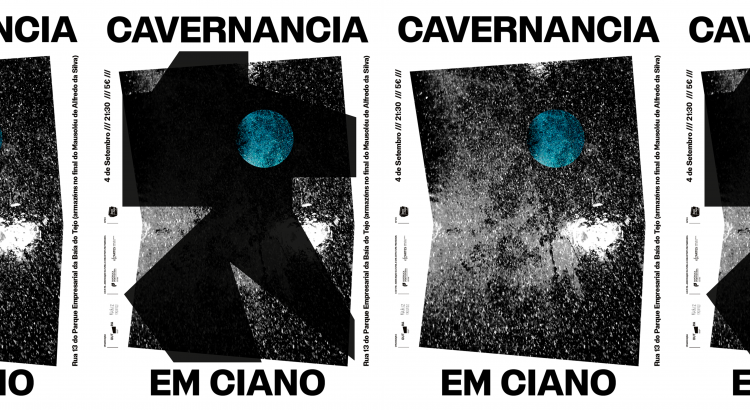
September will be a month filled with firsts - even before the start of the first edition of SONICA EKRANO - Documentary film and the musical fringes (our new film festival, for which tickets are already available), we'll discover the 13th Street of the Baía do Tejo Business Park (more specifically, the warehouse no. 28/30), where the launch concert for the debut album by CAVERNANCIA, "em ciano" (released on tape by Nariz Entupido) will take place on Saturday, September 4th.

CAVERNANCIA is the latest project by photographer Pedro Roque, who we know both from his work in capturing in monochrome what his "Eyes of Madness" see as well as his part in projects like Systemik Viølence, Besta and M.O.T.Ü. On the three tracks that make up this tape, "a noite", "morre", and "em ciano", we travel through pathways with an atmosphere stained by the color spectrum that gives its name to this tape, standing on foundations of noise, drone or ambient music.

The concert will begin at 21:30, with tickets being priced at 5€ (or 2,5 for those under 25 years old). They are already available online at outra.bol.pt, ou in person at Fnac, Worten ou CTT stores.

SONICA EKRANO – Full programme revealed

Olá a todos

As promised, today we reveal the programme for the first edition of SONICA EKRANO - Documentary film & the musical fringes, which will take place between the 9th and 18th of September in Barreiro and Baixa da Banheira (Moita Municipality).

This new festival, dedicated to the music, musicians, sounds and movements at the edges of massification and popularity, is a new space to provide the opportunity to watch cinematic works which remain (even in an age of digital platforms with on-demand content) hard to access, contributing to an increased audiovisual inclusiveness, striving to present a diversity of geographies and strike a balance between historical perspective and contemporary narratives.

Its first edition presents thirteen films, six of them national premieres, namely: Acid Mothers Reynols: Live and Beyond, by Alejandro Maly, which focuses on the Japanese band Acid Mothers Temple and the Argentinian Reynols who came together in 2017, in Buenos Aires, to create a joint record and concert;  Voice of the Eagle: The Enigma of Robbie Basho, by Liam Barker, about the unusual and extraordinary life of the north-american guitarist and composer Robbie Basho; The Albatross Around My Neck: Retracing Echoes of Loss Between Lucknow and Berlin, by Markus Schlaffkre, which presents us with Irfan Khan, one of the masters of the sarod, a string instrument part of the Hindustani musical tradition; Crestone, by Marnie Ellen Hertzler, which takes us to a deserted village in Colorado, where a micro-comunity of rappers lives in isolation, while sharing their music with the outside world through the Soundcloud online platform; Extreme Nation, by Roy Dipankar, a voyage through the indian subcontinent in search of the histories of the extreme mental community and subculture; and Delia Derbyshire: The Myths and Legendary Tapes, by Caroline Catz, a mix of documentary and biopic which portrays the personality and the precious legacy of one of electronic music's pioneers, the British composer Delia Derbyshire, whose career, while forever connected to the theme of the Doctor Who series, which she composed in 1963, goes far beyond it.

Besides this film dedicated to Delia Derbyshire, two other documentaries presented at SONICA EKRANO pay tribute to the recent wave of rediscovery of the pioneer women in electronic music. One of them is Sisters with Transistors, by Lisa Rovner, about the work and genius of the many women at the forefront of electronic music since its beginnings: Clara Rockmore, Daphne Oram, Bebe Barron, Maryanne Amacher, Pauline Oliveros, Wendy Carlos, Eliane Radigue and Laurie Spiegel. The other is Suzanne Ciani: A Life in Waves, by Brett Whitcomb, about the life and innovations developed by north-american artist Suzanne Ciani, and the way in which, starting from a classical music education, she became financially independent by creating music and sound for the world of advertising, using it as a canvas for exploration and revolutionary discoveries.

Portugal is also represented at the festival by two films: SOA, by Raquel Castro, which emerged from an investigation by the director into sound and soundscapes, silence and noise in all of the sound spectrum and its relation with those who hear them; and Caos e Afinidade, by Pedro Gonçalves, which dives into the world of improvised music in Portugal, whose centre is the Irreal Bar in Lisbon, and features the participation of names like Gabriel Ferrandini, Adriana Sá, Carlos Zíngaro and Luís Lopes. Both directors will be present at the sessions.

Wrapping up the programme for this first edition of SONICA EKRANO are the films Swans – Where Does a Body End?, by Marco Porsia, an extraordinary portrait of Michael Gira's Swans, who have built one of the most unique careers in modern rock music; Conny Plank: The Potential of Noise, by Reto Caduff and Stephan Plank, about one of the pioneers of krautrock and electronic pop, Conny Plank, who had a direct influence on bands and artists such as Neu!, Brian Eno, David Bowie, Ultravox or Eurythmics; and That Pärt Feeling: The Universe of Arvo Pärt, by Paul Hegeman, dedicated to the Estonian Arvo Pärt, probably the most celebrated living composer of our era.

These sessions will take place the the José Manuel Figueiredo Cultural Forum (9 to 12 September), the Barreiro Municipal Library (13 to 16 September) and the Augusto Cabrita Municipal Auditorium (17 and 18 September), and the tickets for the sessions at these last two venues are already on sale, while tickets for the sessions between the 9th and 12th will be available soon.

Stay tuned to all the news regarding the festival by following the festival's official website or its social media pages at facebook.com/sonicaekrano and instagram.com/sonicaekrano.

SONICA EKRANO is organized by OUT.RA – Associação Cultural, with co-financing by ICA, in partnership with the Barreiro and Moita municipalities and support by the Transportes Coletivos do Barreiro and Fórum Barreiro.


SONICA EKRANO - Documentary film & the musical fringes

Today we're happy to announce the inception of a new film festival: "SONICA EKRANO - Documentary film & the musical fringes", which will take place between the 9th and 18th of September in Barreiro and Baixa da Banheira (Moita Municipality). 

The name SONICA EKRANO, written in Esperanto (meaning “Sound Screen” in English), seeks to reflect both music and cinema as “universal languages”, while also honouring the strong esperantist tradition in the south bank of the Tagus river.

This new festival is dedicated to the music, musicians, sounds and movements at the edges of massification and popularity, creating a new space to provide the opportunity to watch cinematic works which remain (even in an age of digital platforms with on-demand content) hard to access, contributing to an increased audiovisual inclusiveness, striving to present a diversity of geographies and strike a balance between historical perspective and contemporary narratives.

This first edition will present 13 feature-length films, almost half of them national premieres, and the full programme will be revealed by the middle of August at the festival's website: www.sonicaekrano.com

This festival is created by OUT.RA - Associação Cultural with co-financing by ICA and in partnership with the Barreiro and Moita Municipalities.

Meanwhile, mark the dates on your calendar!

A OUT.RA procura: Responsável Financeiro (full time)

A OUT.RA, associação cultural fundada em 2009, com sede no Barreiro e trabalho na área da música experimental / exploratória / contemporânea procura:

Responsável Financeiro (full time)

Funções:

Administração e coordenação financeira, reportando directamente à direcção em áreas como:

  • Organização administrativa e financeira;
  • Elaboração e gestão de processos de orçamentação, de controlo de custos e de resultados;
  • Elaboração de relatórios de acompanhamento financeiro e de actividade referentes a financiamentos nacionais e europeus;
  • Preparação e manutenção de dossiers de projecto;
  • Digitalização e contabilização de documentação financeira e articulação com Técnico Oficial de Contas;
  • Participação no processo de angariação de apoios e financiamentos;
  • Acompanhamento administrativo e financeiro de contratos e protocolos.

Perfil:

  • Experiência em funções similares de administração e gestão de projectos e/ou habilitações: académicas (licenciatura/mestrado) em Gestão Cultural ou em Contabilidade, Economia, Gestão e áreas afins;
  • Conhecimentos e experiência de orçamentação e execução orçamental, controlo de custos e contabilidade geral;
  • Domínio de ferramentas de produtividade (editor de texto, folhas de cálculo avançadas, editor de apresentações, dropbox, googledrive, e-mail, etc);
  • Conhecimento das regras de contratação pública;
  • Excelente capacidade de expressão e comunicação, com domínio da língua portuguesa e inglesa, sendo valorizados particulares dotes de comunicação oral, em contexto de reuniões com entidades parceiras e financiadores;
  • Elevado sentido de responsabilidade, organização, capacidade de planeamento, autonomia e de trabalho em equipa;
  • Interesse pelas artes, cultura, património e por questões contemporâneas, demonstrando valores humanos evidentes (cortesia, fiabilidade, persistência);
  • Carta de condução e carro próprio (factor preferencial);
  • Residência no Barreiro ou Concelhos limítrofes, incluindo a Grande Lisboa;
  • Disponibilidade para participar em eventual entrevista na segunda ou terceira semana de Setembro e para iniciar funções em Outubro.

Oferece-se:

  • Contrato a termo (12 meses, renováveis por mais 12 meses) com forte possibilidade de passagem à efectividade em função da capacidade de trabalho, conhecimentos demonstrados e integração na equipa;
  • Envolvimento num projecto aliciante, com contacto directo com a comunidade artística local, nacional e internacional;
  • Possibilidade de implementar e melhorar processos de trabalho, contribuindo para o crescimento e consolidação da associação;
  • Remuneração de acordo com a tabela salarial praticada na associação (salário e respectivos subsídios de férias, natal e de alimentação).

Data-limite da candidatura: 4 de Setembro de 2021

As candidaturas devem incluir, carta de motivação / expectativas, CV detalhado e uma fotografia, e devem ser enviadas para o e-mail info[@]outra.pt com o assunto “Recrutamento”. Eventuais cartas de recomendação evidenciando experiência passada são aceites e valorizadas.

July at the Municipal Library: Manuel Mota & David Grubbs and The Selva

Today we announce two concerts to take place in July, with our regular programming marching on through the difficult times we live in and providing us with the ever more necessary nourishment for our spirits. 

The next Friday, the 16th, will be a momentous occasion in which we'll receive two absolute masters of the six strings, two enormous inspirations and influences in our paths as music listeners: none other than the duo of Manuel Mota & David Grubbs (yes, him!), who bring with them a beautiful and sadly neglected 2018 album, 'Lacrau', released by Drag City. We can expect their collaboration to be a sensitive, touchingly poetic one.

Then on Tuesday the 27th, the eagerly awaited Barreiro debut of the trio The Selva will take place, a group made up of first-rate Portuguese musicians who make their way through jazz, free improvisation and chamber music of a sort: Ricardo Jacinto (cello), Nuno Morão (percussion) e Gonçalo Almeida (double bass) are the protagonists.

Both concerts will take place at the Auditorium of the Barreiro Municipal Library, starting at 21h00, with tickets costing 5€ (or 2,5€ for those under 25 years old).

You can already purchase tickets online through outra.bol.pt, or in person in Fnac, Worten or CTT stores.

Saturday at the Municipal Library: DDK Trio

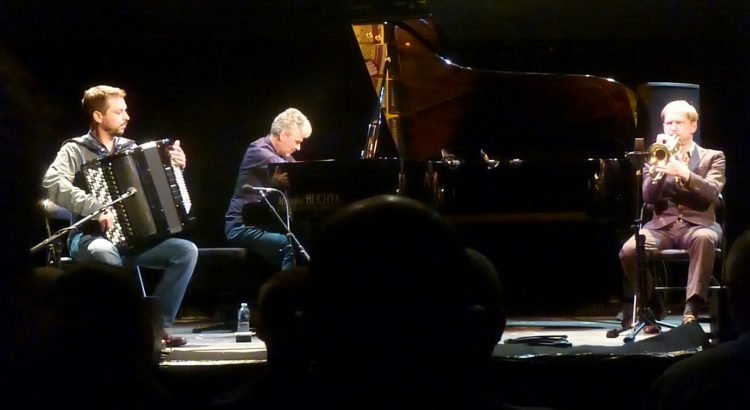
We're back to our regular concert programming after three wonderful days of OUT.FEST with one of 2020's postponed shows: the DDK Trio, made up of German trumpeter Axel Dörner and the Swiss musicians Jacques Demierre (piano) and Jonas Kocher (accordion), who present their free, poetic and attentive improvisation at the Auditorium of the Municipal Library this Saturday, the 12th, at 21:15.
Tickets can be purchased at the venue from 20h45 onwards for 5€ (general audience) or 2.5€ (under 25 years old).