We’re happy to announce the winner of the 2022 OUT.RA Creation Grant, after carefully analyzing the applications we received during the start of this year.
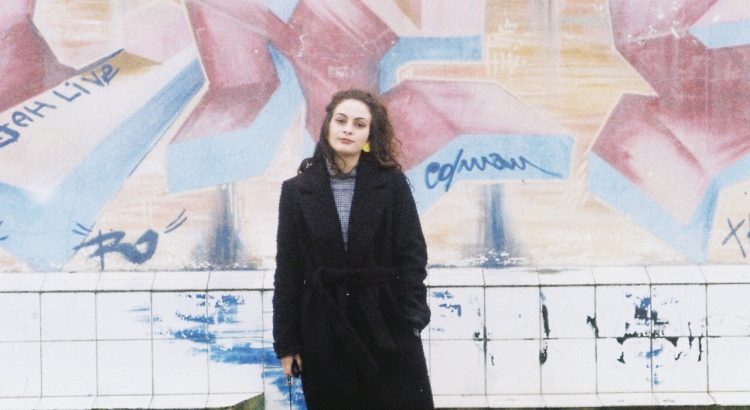
This year’s winner is Rita Santos, composer and sound artist born in Barreiro who is currently studying towards a Master’s degree in Musical Science at Universidade Nova de Lisboa, where she develops investigative work in the fields of sound consciousness, acoustic ecology and soundscape composition, with a project entitled “A Segunda Natureza” (“The Second Nature, in Portuguese), a sound art piece which will strive to “create an immersive sound space which emulates the second nature of an aquatic body”.
This work, which will be developed over the coming months, will be presented as an installation towards the end of the year. Stay tuned for more news!
Even with April having barely started and two unmissable events already on the horizon, we refuse to stop and now share with you everything we have in store for May and June (which is going to be crazy!)
On May 14th we will celebrate the creativity within “Greater Barreiro” with the presentation of the final work by the two recipients of OUT.RA’s Local Creation Grant for 2021: George Silver (André Neves) and Puçanga (Vera Marques). Both of them will be presenting new releases, with the concerts happening at ADAO and entry being free of charge.
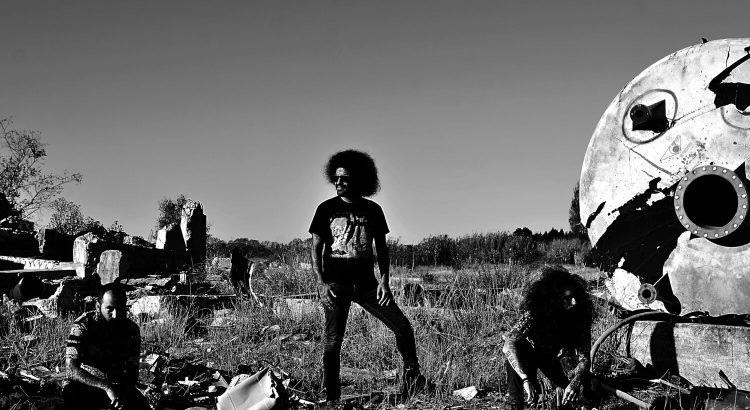
The month that follows is JUNHO CRAZY: three nights full of great concerts with Deafkids from Brazil and Clementine from Lisbon (June 3rd at ADAO), Duma from Kenya and Cavernancia from Barreiro (June 11th, at Gasoline), and Föllakzoid from Chile and Anti S. from Catalonia (June 25th, again at ADAO, finally fulfilling our promise to host these bands in 2020, which we were forced to postpone due to the pandemic*).
Since this June truly is Crazy, we have a combo ticket with special pricing for these three concerts, available in limited quantities, which you can already purchase through outra.bol.pt and its associated stores. Also available are the individual tickets for each of these events.
* Tickets purchased for the original 2020 date are still valid for this concert
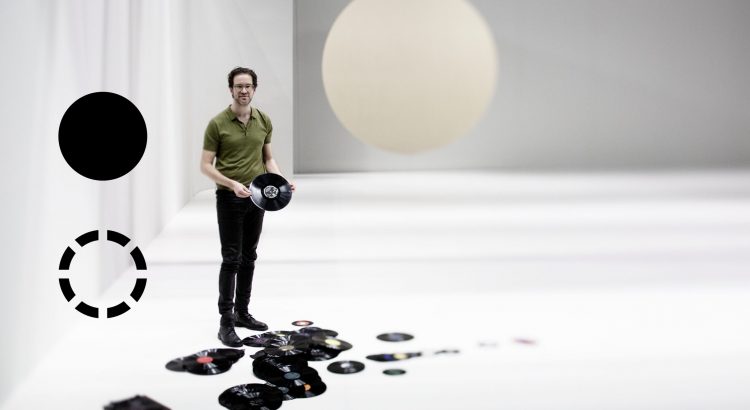
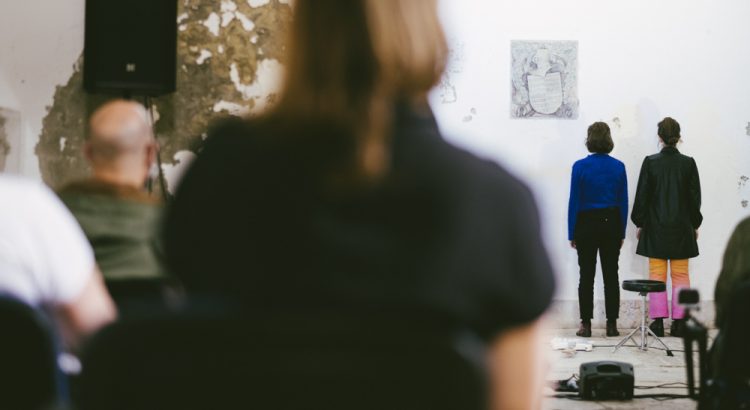
Taking place Friday, at around 17:00 at Castro Marim Castle, will be the first public presentation of work developed by the artists-in-residence of the Particular Universal project: in this instance that of Norwegian artist Erik Dæhlin, a composer working across Sound, Image and Text who has, since March 13th, explored the different places and environments within the Castro Marim Municipality (including the Castro Marim and Vila Real de Santo António Marsh Natural Preserve, with a particular focus on the Guadiana river delta), making a record of his impressions through texts, field recordings and photography, all of which he has worked on with a view towards Friday's performance / talk, which will afterwards be evoked in a piece to be presented at the Only Connect festival in Oslo, towards the end of April.
Be sure to check out the teaser below, which includes a small part of the conversations we've had with the artist during his residency and a glimpse into his working process.
We're super excited to share the five-yes-five events coming up in March and April throughout Barreiro - a strong return with must-see concerts which take the pulse of what's being made throughout the country and the world.
On March 11th, we'll host, for the first time, a transatlantic quartet carrying within itself all of jazz: guitarist Luís Lopes' Humanization 4tet, accompanied by Rodrigo Amado's saxophone and the drums of Texans Aaron and Stefan Gonzalez; the group's latest album, their fourth since they began playing together in 2008, has made its way into almost every international list of 2021's best albums, and their concert promises to feature the fire of free, the melody of bop, and the energy of punk. There's hardly a better way to return to a venue where we've been very happy, one under a new and dynamic management - Sala 6 (formerly the Be Jazz Café).
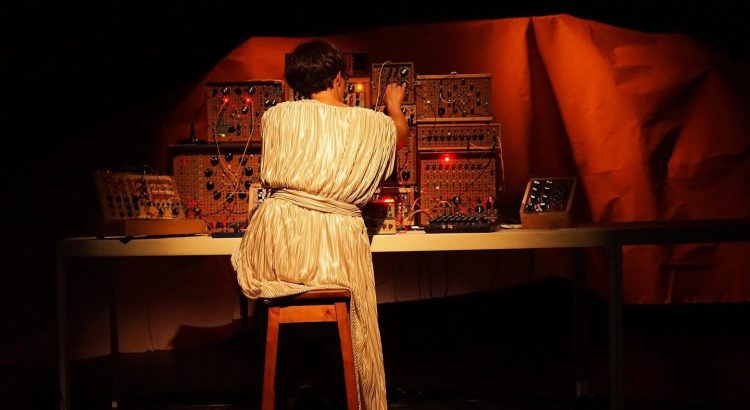
One week after that, two returns: the remarkable Clothilde, master of modular sonic architecture and elecronic soundscapes created with a wall of synthesizers handmade by the musician known as Hobo, returning to our city after her performances at OUT.FEST in 2018 and 2019, and the promising João Silva, the trumpeter we had the pleasure of listening to around two and a half years ago as parte of the special night dedicated to the Creative Sources label. These concerts will take place at the Auditorium of the Municipal Library on the 18th.
Onwards to April, when we'll have two more evenings of creative music: first, on the 15h, we return to Sala 6 for the explosive meeting between two stars of Portuguese jazz - Ricardo Toscano & Gabriel Ferrandini bring us their duo, full of lyricism and fury, a dialogue between the poetry of Toscano's saxophone and Ferrandini's infinite drums.
On the 29th, and again at the Municipal Library, an evening of free improvisation will take place with the Barreiro debut of Belgian artist Farida Amadou, a leading name in European new music who, with an electric bass, an amplifier and half a dozen pedals, redefines the role and the potential of the instrument. Also performing on that evening will be "our" Fernando Ramalho, doing the same with a guitar and his oblique poetry.
Tickets for these four events can already be purchased, as usual, either online, or person at BOL's associated stores (such as Fnac and Worten).
To wrap up these announcements, we can't forget the fifth event - the first one, in fact: On the afternoon of March 5th, at the Municipal Library, another public moment of the work developed by one of the OUT.RA grant recipients will take place: Vera Marques aka Puçanga will play host to another session of “Vozes Plurais“, a cycle of talks, open to the public, regarding the affective and political power of the voice in its many expressive forms, be they musical, oral or written. This time the guests will be the historic anti-fascist militants Helena Pato and Álvaro Monteiro. Admittance is free for this event.
These coming months will thus be filled with great opportunities to see each other again. See you soon!
Our shows return with a friday night party at Gasoline to celebrate and present to Barreiro “Bindi", the new album by Rabu Mazda aka Leonardo Bindilatti, an illustrious resident of these parts for the last couple of years.
Leo’s special guests for this occasion are Silvestre, a young Lisbon producer mixing everything under and over the sun who even brings along dancers, playstation challenges, lights and smoke out the nose, and Irish musician Seán Being, a happy example of our country’s takeover by British Islanders and crafter of a delicate ambient-pop which reveals an in-depth learning of the meaning of saudade.
Tickets are already on sale through outra.bol.pt and associated stores for 5€ (2,5€ for under 25 year olds).
A OUT.RA – Associação Cultural procura uma pessoa para exercer as funções de Produção Executiva Local das actividades do projecto Particular Universal no concelho de Castro Marim.
O projeto engloba diversas atividades artísticas até 14 de setembro de 2023.
O/a produtor/a terá como principais funções:— O acompanhamento das actividades a realizar durante toda a execução do projecto, nomeadamente assistência a artistas em residência;
— Todas as tarefas inerentes à produção de eventos e apresentação públicas (definição de horários, licenciamentos, articulação entre todos os intervenientes e demais detalhes de ordem logística e técnica);
— Representar o projecto em visitas e reuniões com artistas, parceiros de projecto, representantes de entidades locais e membros da comunidade.Necessário:
— Ter residência habitual no concelho de Castro Marim ou num dos concelhos limítrofes;
— Falar e escrever fluentemente português e inglês
— Domínio de ferramentas de gestão de produção online (drive, dropbox, email).
— Deverá ter carta de condução e viatura própria.Candidatura:
Para a candidatura deverá ser enviado email para info@particularniversal.pt com identificação, carta de motivação e CV, até às 18h00 do dia 31 de Janeiro de 2022.
Candidatos/as com os CV’s mais adequados ao perfil pretendido serão contactados para realização de entrevista.
Today we're very happy to announce our new and ambitious project to the world: PARTICULAR UNIVERSAL, which will take place in the magical Castro Marim municipality, in the most southeastern part of the country.
With financing by the Culture programme of the EEA* mechanism, and partners such as the Castro Marim municipality, the Norwegian NyMusikk and Lisbon associations Teatro do Vestido and Filho Único, we will develop several artistic co-creation activities related to themes of identity, memory and soundscape in the region, among which two dozen artistic residencies oriented towards the development of sound art and new music pieces by Portuguese, Norwegian and international creators, as well as the creation of a sound archive, a community archive for the "Voices of Memory", and the community production of theatre performances in dialogue with the municipality's inhabitants and immaterial heritage.
The project website is already online, and there we will soon announce several events and opportunities for artists across the world. Make sure to visit it and follow all the news related to this project through our usual channels.
OUT.RA – Associação Cultural is now accepting applications to its creation grant by young local artists who want to develop artistic work related to music / sound / sound art / multimedia during 2022.
This year, we've decided to remove the age limit from this grant, although it remains focused on supporting emergent artists without a consolidated career.
The broadened geographical scope established in 2021 remains, and artists residing in neighbouring Moita and Seixal are still eligible for this grant, which amounts to 1000€.
Since 2015, the OUT.RA Local Creation Grant has supported artists like André Neves, Van Ayres, Camila Vale and Vera Marques, among others.
You can read all the necessary information regarding this grant below. Applications are open until January 16th 2022. We're looking forward to receiving your projects!
OPEN CALL
BOLSA DE CRIAÇÃO LOCAL OUT.RA 2022
The criteria considered in selecting a project for this grant are as follows:
Resident in the Barreiro, Moita or Seixal Municipalities;
Over 18 years old;
Education (higher or technical) in artistic fields, particularly in Music / Sound Art / Multimedia / Ethnomusicology, or alternatively relevant work already developed in Music / Sound Art which reveals an interest in seeking new solutions and an idiosyncratic artistic personality;
Awareness of the work developed by OUT.RA (OUT.FEST, regular programming, sound documentation, etc) and degree of project fit with said work;
Conceptual quality of the creative project, level of maturity presented in regards to its development, feasibility of the presentation in terms of means necessary towards realizing them;
The work developed by the grant winner should result in at least one public presentation.
This grant is set at 1000€.
Applications should be sent to info@outra.pt up until January 16th and contain the following information:
Name, CV and artistic biography;
Project description and calendarization.
Materials necessary for the development of the project.
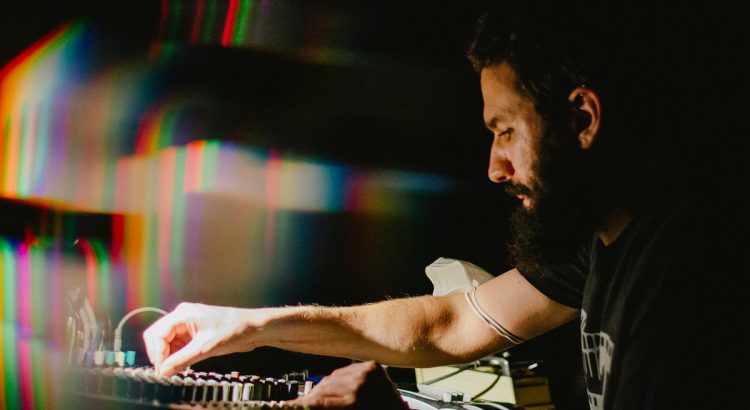
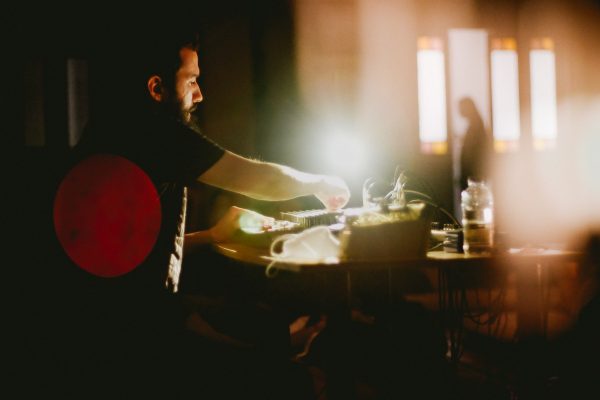
João Sarnadas, aka Coelho Radioactivo, was the man in charge of opening the last day of the second moment of OUT.FEST 2021, presenting a deep listening experience intimately connected to that of his debut work under his own name, the two double albums "The Hum" & "The Humm". At SDUB "Os Franceses" we were able to listen to two hours of electronic improvisation rich in harmony and texture in the perfect conditions for doing so: lying down, eyes closed, absorbing the sound.
We also had the chance to speak with the artist before and after the concert, and it is the compiled result of those interviews we present to you below.
What was your first contact with this kind of long-form, minimal music?
Hi hi. I always loved long music, not necessarily in terms of its duration but more of its composition, and the use of continuous sounds, for many reasons, including the fact that often there’s some sort of drama associated with long music like that and that drama is something I relate to easily. Thinking about it on the spot, I’d say my first contacts with long-form minimal music happened with artists who aren’t particularly “durational” or minimal, the first pieces I recall are “Back to Schinzo” by Pascal Comelade and “Stranger Intro” by Bill Frisell (the intro for a Marianne Faithfull album) which were songs I heard a lot when I was a kid. Pascal is one of my favourite musicians ever, and fortunately he has enough albums to be able to constantly hear new things from him, I only discovered his first, more experimental albums around 5 years ago. “Stranger Intro” is a 30 second loop that I heard on repeat, and I decided to make a version of it for this album, although when I made it I didn’t necessarily know it would become part of an album, I only wanted to try playing it in order to listen to what a version with more than 30 seconds could sound like, and it ended up turning into D1 M Bombarda Transmission. When it comes to more intellectual stuff, I think the first long-form minimal musician I got into was La Monte Young, then maybe Terry Riley’s concert with Don Cherry in Köln. But I don’t know if these were my inspiration to make this album, especially because this long form comes more from the way I play than from a prior decision to do so. Those are obviously musicians I enjoy, so they ended up influencing my melodies and my thoughts, but I think the music is always the result of a much wider range of influences.
Could you tell me a bit about the equipment you use on this album? It was built by Inês Castanheira, who runs a DIY synthesizer workshop. Was it a commission or was it given to you with the three oscilators?
Yes, the synthesizer I used on this album and the one I now use live is a simple one, with three oscillators and three on/off switches, made by Inês Castanheira. I’m fortunate enough to share not only my life but also my house with Inês, so I have easy access to the things she builds, and this one in particular is one of the first she built, because she was starting to explore synthesizer-building at the time, and that’s precisely the reason why it’s so simple. We started using this synth and another one in a project we both have called Well, and I eventually started using it in collective pieces by Favela Discos, such as the “Desilusão Óptica” piece. That was the background I had in developing the approach to the material I created for this album, based on the use of this synthesizer, the mixer, loops and other effects pedals.
You recorded this album in two days, which resulted in 8 hours of recordings, and it took you three years to mix it down to two albums of two hours each. What kind of methods did you use to bring it down to that size and what kind of challenges did you encounter in the cutting room?
Well, at the time when I did that recording session, I didn’t really have the idea of making an album out of it. As I said previously, I simply felt that I had arrived at a different way of playing from what I did as Coelho Radioactivo, for instance, and that I wanted to record something using that “language”. I actually feel like The Hum has something of Coelho Radioactive in it, I think that the melodies have something to do with that universe, as does the use of loops, which was something I did often both live and when playing by myself at home. At the time I had Nuno Loureiro’s mixer at my house, because I had used it at a Desilusão Óptica concert, and so I took the chance and started recording for two days, which as you mentioned resulted in 8 hours of music. It was actually more, around 11 hours, but I usually don’t count those hours because they weren’t that great to begin with. Basically, the biggest challenge was to understand the results I came up with, which led to two problems – first to reduce the music to a more acceptable length to make them understandable as “songs”, and second to figure out what those songs were, if they’d lead to three albums, to one, to two…which way to order them made sense…Eventually I managed to simplify it into two albums, one which was more “drone” and a more “ambient” one, or a more “atonal” and a more “melodic” one, a “daytime” album and a “nightime” album, but over those three years I started grouping the music with really quite different concepts, which probably aren’t that clear but which helped me understand what these songs were.
I read somewhere that you took cues from “the unique harmony of each city you lived in”, could you tell me a bit about that? Do you see any crossover between your music and architecture?
Well, in fact, even through it was inspired by things I feel about the record, the process, and my thoughts when I was making it, that’s a bit of press mumbo-jumbo. I’m always torn between conceptualizing the music I make or not, I usually don’t make things following a pre-defined concept, the only thing I’m interested when I’m recording is my intuition, and if I’m enjoying the music I’m creating. However, on the other hand, I’m interested in thinking about sound, and it’s something I do on my day-to-day for various reasons, either simply because of reading things about music and sound, or due to communicating about what I do solo or with the people I work with on a day to day basis – for instance, with the rest of the guys at Favela Discos when we develop collective pieces – we obviously need to speak about what we want to do, and either you want to conceptualize what you do or not you always end up having some thoughts about what you are doing. In that sense, something I’m interested in, for instance, is the relationship between ambiguity and deep listening. In the same way you can, with deep listening, discover melodies, rhythms, tones, etc in the soundscapes of a city, you can also discover new sound layers in the kind of music I make, in between the more obvious melodies you can discover other melodies, like you can distinguish them in the middle of the mass of sound and noise. In that sense, I think the relationship with the city soundscapes is that one, discovering some musical logic in the midst of the mass of sound we’re exposed to, between cars, fans and turbines, those noisy air conditioning things, and all the other things that make up the sound floor and which we sometimes don’t even notice.
The global phenomenon of ‘The Hum’, with tales of people who are almost chased by ultra-low frequencies in residential or industrial zones, is considered an unpleasant sound, one that leads to insomnia and headaches. Those are the last things I’d mention when describing your music. Does the album try to redeem this type of sound and put it in a different context, in a way?
Well, first of all thanks for the compliment. Regarding The Hum phenomenon, I think it’s unpleasant because it’s a sound that is an undesired and permanent intruder, but maybe that sound would be acceptable in an experimental music context (laughs). My idea isn’t so much to redeem the phenomenon, I simply think I adopted the name as a more encompassing term, like I said above, I think my The Hum is more about the sound of cities which isn’t immediately perceptible to us. This phenomenon isn’t audible to everyone, apparently some people are more susceptible to it than others. So, I wasn’t interested in talking about a violent, people-chasing sound, but simply about a sound which we only perceive when we become aware of its existence, or something like that. I’m interested in the idea, but not so much in the text-book definition of the concept, and like the music, one of the main reasons I chose the name was due to my intuition, I liked the mystic aspect of the idea and it looked like a cool name. Besides, I also used this theme and title for a comic book released by O Panda Gordo in 2016 or 2017, and at the time I thought it would be cool to connect the two things because they work on the same idea in very different ways.
How different is the album and the music when you play it live? Did you make any adjustments for the OUT.FEST concert?
Well, I’m not actually playing the music on the album, what I’m doing is using the same means and techniques to create new music. The album was created through improvisation, which is what I do live, although lately I’ve been bringing along some pre-recorded loops so it isn’t as boring. During rehearsals I tried to replicate some of the music on the album, but I wasn’t a fan of the result, since I was concerned with make the music sound like the album it ended up sounding like a cheap copy of it, which both wasn’t identical to it or as interesting as it. So I thought the best thing to do was to simply use the techniques I used on the album to create something new, which isn’t what’s on the record but is a part of it, in a way. For OUT.FEST, the only special thing I did was to select some pre-recorded loops, but the concert preparation was all very chaotic because it was the first time I used the scenography and it was all a bit last minute. I think the biggest adjustment I made for this concert was to use the “city” prop, or whatever you want to call it, which was something I wanted to do since the beginning but hadn’t had a chance to, and I was very happy with the result.
It's been almost two months, and we're now totally focused on OUT.FEST 2022 - the 18th edition of the festival, which is thus nearly coming of age - but this week we've released a mini-documentary which recaps the events of the second half of 2021's edition of OUT.FEST, which took place in October.
Created by Mário Jerónimo Negrão from interviews, video and sound gathered by the OUT.FEST team with the help of many collaborators and friends (for which we are thankful), it serves as a way to celebrate and remember six days of intensive listening, of long awaited reunions, and new and long-lasting discoveries.
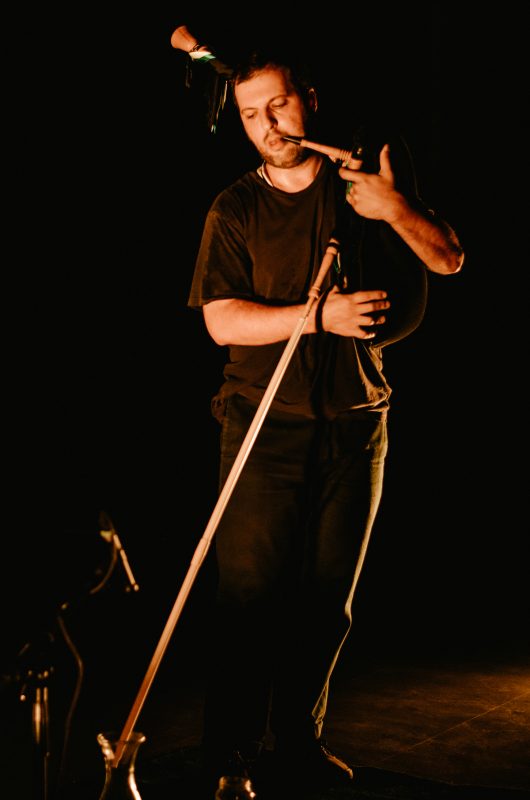
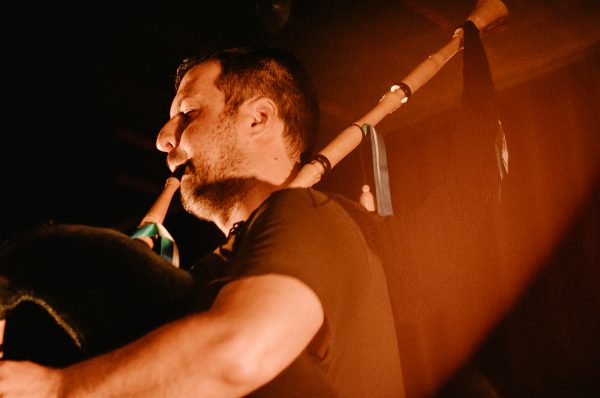
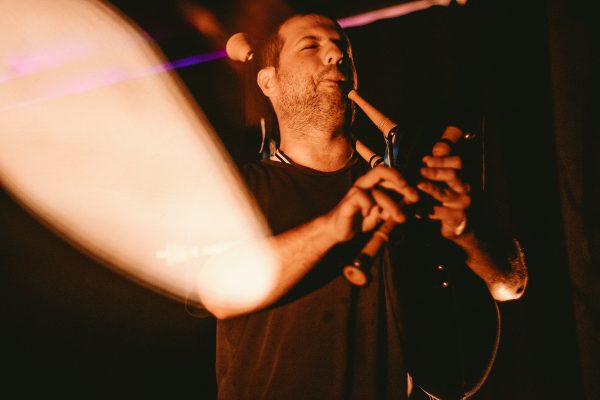
In the week prior to the start of the October moment of OUT.FEST 2021, we had the chance to talk to Vasco Alves - bagpiper for 'Os Belenenses' football club, member of VA AA LR and heroic investigator of acoustical phenomena and the materiality of sound, whose trajectory's been discreet but continuously fascinating, resorting to numerous sound sources and methodologies including synthesis and amplification techniques, tape recorders, signal processing and – more recently – bagpipes.
Can you tell me a bit about your experience with the bagpipes? How did you start playing them and how did your relationship with the instrument develop over time?
I started learning the bagpipes in 2014, at the Lisbon Galician Centre, and during the first years I had a traditional learning experience, but I always wanted to use the instrument in a less conventional, more exploratory way, closer to the themes I’m interested in, and that’s something I was only able to do a few years after I started playing the bagpipes. I think it was about three years ago, maybe in 2018, I started preparing a few pieces which, although they also include some electronic material, work on acoustic phenomena and psychoacoustics above all. I always try to explore some kind of effect within that field.
And what drove you to this instrument specifically? Because in 2014 you were already active in making music, right?
Yes, I had been playing for quite some time by then...I had two experiences which were somewhat surprising, so much so that when they occurred I didn’t even imagine I’d be learning an instrument one day. One was a concert by Paul Dunmall in London - he’s more associated with jazz and even improv as a saxophone player, but he has a personal collection of bagpipes from around the world. Me and a friend invited him to play at a concert we were organizing when I lived there, and he did a performance where he played with several bagpipes throughout, and there were some amazing moments in there that I wasn’t expecting, even in terms of the sound material...when the bagpipes were amplified, if you closed your eyes you could imagine it was a laptop concert, a computer music concert...well, there were some really surprising elements, and then when I returned to Portugal in 2014, I ended up attending one or two concerts where the instrument was also used, although outside this context, but then I decided to learn it, in a somewhat spontaneous way. And that was it, I liked it and kept doing it and at this point it’s possibly the instrument I work with the most, even though I also explore similar themes when I work with electronics.
On that topic, when did you become interested in electroacoustic music? Was there a specific moment when you discovered that kind of music and thought that was what you wanted to explore?
I don’t know if I can name a specific moment, I think that it’s probably related to the music I heard during my adolescence, which led me to have some interest in exploring, in following the more exploratory path in music, the less conventional one, so to speak. And in my university years, if I’m not mistaken, I learned how to make some contact microphones and some other small things (I think my first recordings were with that material actually, even if they were done in a very naïve and intuitive way), and well, things evolved from there, I kept being interested in instrument building, in exploring materials…Obviously, the things I’m interested in nowadays aren’t necessarily the ones I was interested in at the time, but it’s been evolving, going through several phases, although I think there’s something that unites them.
So what was the music you heard as a teenager that led you in that direction?
Well…in my early teens I listened to a lot of Sonic Youth (and all the musical scene they were a part of), that’s possibly one of the first times I saw instruments being used in a less conventional way. And going back to your previous question, there was actually a moment when I discovered Christian Marclay’s work, I saw one of his exhibits as well as some concerts and tapes, and I think that moment marked me somehow, also because of the way he used the materials and the sound that was generated by the things he built, the processes he explored and which were part of his pieces, all of those were very influential to me at the time. Soon after I discovered the great master, Alvin Lucier. There are many other things which have influenced me since, like the work of Rafael Toral, and Sei Miguel…But well, it becomes difficult to name specific influences, since I’ve been influenced by so many things.
The relationship I see between all of those musicians is in part related to what Eddie Prévost says and tries to teach others, which is to see an instrument as something to play “outside the box”, that you should be something of an explorer and improviser with instruments. On your website I saw the radio you played, and it looked familiar – were you at Eddie Prévost’s workshop [at OUT.FEST 2015]?
Yeah, I also used to take that radio to the workshops he organized in London, which were a weekly improvisation meet-up, every Friday night in a church basement, where everyone could show up and join, and for about two years I went there regularly, so that’s why I also participated in the Barreiro workshop that OUT.RA organized.
And what did you learn from those workshops? How did they help you develop your work?
I think those workshops had quite the impact on me at the time, but nowadays I don’t feel as close to or interested in free improvisation, which is basically what Eddie Prévost is focused on. Those workshops were an amazing thing for me at the time, both on a personal and social level, there was a dynamic which to me was new and quite exciting, the way the workshops took place and how people played there… there were small rules, but there was a lot of openness and fluidity and no-one ever told you what you should or should not do, and that fascinated me for a while. Meanwhile I think it lost a bit of…I don’t know if I became less naïve about that idea, or if I simply became more interested in other ways, other things…but I also experienced some incredible moments, there, with really great musicians, and I think that at a certain point, towards the end of the time I participated in those workshops, I would go there more to watch one or two people (like Seymour Wright) whose work I was interested in and fascinated by, and the five or ten minutes I’d hear them play would make the hours I’d spend there worth it…
You were saying that your interests started to change – can you tell me which part of music interests you the most right now?
Well, about free improvisation: I think that’s not the core of what I’m interested in nowadays. My work, be it electronic or acoustic, always involved a lot of volatility and so improvisation is still very important to me, but I like to work on themes, be them things that came from working with an instrument (in the wider sense), from the “life” that volatility and instability can generate, but also spatial themes, of the connection between the instrument and the space, and trying to somehow find a way to create work which fits in this context. Improvisation is obviously always present, because I have structures but I don’t define what I do exactly, there’s space for me to react to things in the way that seems the most appropriate in the moment. The bagpipes themselves, being such a rough, primitive instrument in a way, and maybe the instrument’s limitations themselves, I think they’re a good way to explore this kind of ideas, because in a way I feel like that simplicity and rawness then allow others parts to come to the fore, to have some importance, be heard and perceptible, and the bagpipes end up being the trigger for those events, in a sense… trigger para esses eventos….
That brings me to another question – I notice that in your music, especially your most recent work, there’s a certain duality, between folklore, some very primordial stuff, and a more technologic and machine-like angle. I don’t know if that’s something you agree with…
It’s certainly not intentional. The tools I use often tend to define what I do. The bagpipes fell into my lap so to speak, like other things I’ve been using, and my perspective has been more like: “What can I do with this instrument, what does it give me, how can I apply it to what I’m interested in doing sonically?” In the concert I’ll be presenting at OUT.FEST, the computer is simply generating a frequency, a sawtooth wave, which has a very similar sound to the bagpipes, it ends up being almost like a second player, which then generates this clash of frequencies…It’s a bit hard to define, but like I mentioned I’m interested in exploring instabilities in the processes and mechanisms I build, and I try to do it with the bagpipes as well. But like I said it’s not a conscious decision, I like to work with rawness, I’m interested in a certain dryness in things and materials, and I move towards musical construction from there, to develop the work I do, but in fact, to me these are all things that fit mentally in the same place: to use the bagpipes or a synthesizer or a circuit I built or a radio, the ends to me are the same, there is no concept behind that.
You use the instruments because you really like their sound…
Yes, and because I’m interested in the rawness and brutality of things like white noise, or the sound of the bagpipes, which is also quite simple, in the simplicity in working with electronics, I’m really fond of all this…let’s say that the notion of economy, of doing a lot with meagre means is something I’m really interested in and that I strive for in the processes and things I create.
I wanted to ask you about the work you’ll be presenting at OUT.FEST, “Gaita Contra Computador” (“Pipes vs Computer”). The title calls to mind the idea of opposition, of combat, almost…You mentioned there’s a computer tone that’s really close to that of the bagpipes, can you tell us a bit more about that work of yours?
“Gaita Contra Computador” is the title of a CD I released last year, and yes, the work is based on the creation of a few pieces which are relatively short, some of which influenced the name of the album and which involve the bagpipes used without amplification in a space, while the computer is generating a frequency I programmed which generates tones that are very similar to those of the bagpipes, and the idea is that when frequencies cross in the space they create a some acoustic effects (like pulses, for instance)…My intention is to give listeners an impression that there’s a new sound emerging at a certain point, an union between the two sounds where eventually you stop being able to distinguish one from the other…but overall I’m interested in knowing how sounds cross in the space, it’s like I have another person playing with me there, but when you explore frequencies which are very, very close and you move around in the space there are small effects that come to being, in the acoustic space in this case, the concert venue.
Then I might present some acoustic pieces as well, without the computer, where I explore the bagpipes and their physical limits, I try to pull the pick to sound registers which aren’t exactly the ones the instrument is meant to reach, looking for flaws and exploring those flaws and that instability. Then there’s another piece which involves adding a tube to the bagpipes and pointing that frequency to a few jars on the ground, and explore the jars’ resonating frequency – when you bring the sound of the bagpipes closed to the jars a new frequency emerges, and it’s a piece focused on that interaction…and my concert will explore these ideas – they are pieces which somewhat resemble what’s going on in the record but which are in constant evolution, every time I present or rehearse them they are adjusted and mutate over time.
And the space itself influences the way the pieces sound like – I remember, for instance, having had Erwan Keravec play in Barreiro, and he was very happy with the natural reverberation and amplification of the church he played in…How has your experience been like in playing in different spaces, do you also feel like it has had a big impact in the way you play?
Of course, it always does, not only in acoustic pieces but also in the ones I use the computer in…the resonance of the space tends to make the pieces sound a bit better, I think, they might not work as well in a very dry space…I could be forced to think of something else, but yes, the acoustics of the space are really important, it’s something I always have to keep in mind every time I play, and in this case I’ve already been to the library [the Municipal Library of Barreiro, where the show took place], to check it out and try playing there, and that ends up influencing what I’ll present somewhat…
You were telling us how you’re really interested in intensity a while back. I wanted to ask you about “Estrada Longa” [Long Road] – I was listening to it a few days ago and felt that it had something close to motorik, not so much in the rhythmic sense of krautrock, but as a certain propulsion and trance, not in an intense way, but conveying motion, and the bike ride…Which is what inspired “Estrada Longa”, your trip on the N2 on a bike in the middle of the pandemic, right? Can you tell us a little about your trip, and how that influenced the record?
Yeah, that was it. I made the trip on my own on a bicycle, and at the time I hadn’t planned to make anything out of it, I simply started riding and seeing tonnes of place names that I liked, and so I decided on the first day to start recording the names of the places I passed through. Almost all of them, although I didn’t do it constantly – first I’d pass through a few, record it on my phone, then I’d go a little further and record some more, and by the end of the trip I had almost 150 place names recorded, from Trás-os-Montes to the Algarve.
Then I spent some time thinking about how to use that material. Those were phone recordings, and often I was pedalling as I recorded, so even though I thought they were interesting I couldn’t quite get them to fit, and so I concluded that the raw material wouldn’t be as interesting (even though I find that aspect interesting as well). What I ended up doing was to grab a pair of synthesizers I had at home and which I use often and which basically allow you to create a sort of patterns with a lot of instability and volatility due to the way they are connected, there’s a cyclical aspect to it, but non-linear in a fashion, and I thought that the two things could be joined, so I created other patterns, one for each day of my trip, and I re-recorded the names of the places I passed through each day.
And that’s how the record came to be – as you mentioned, there’s that cyclical aspect of the synthesizer, and I wanted to get a sense of monotony across as well, I was interested in that idea of long days, of never-ending but constantly mutating roads…that’s how the pieces emerged and they had that final result, the album. I’m not sure if it makes sense to follow up with it, I think that work ended there, with that piece, which sometimes I think could have been longer: instead of 50 minutes it should be four hours long, but that’s how it ended up like…
The last question might be a bit of a silly one, but: how did you become the piper for Belenenses [a football club based in Belém, Lisbon]?
(laughs) My connection with Belenenses comes from my family, my grandfather and great-grandfather were from Belém, I’m a supporter since I was born, etc…The club was recently relegated to the last division, because of the conflicts with B-SAD, and the first time they played after that I decided to take the pipes with me. I had already spoken with some friends who were connected to the supporter group, and I started playing the club’s anthem, everyone started singing in the stadium, and at the end of the day there were already videos on YouTube connecting that moment with an old tradition of the twenties, the Belenenses’ fifteen minutes – supposedly the club made a series of comebacks in really important games that year, including a famous one against Benfica. And so for many years the supporters would make a lot of noise in the last fifteen minutes, I heard that with whistles and pans, and someone connected my playing to that tradition, so now during games, in the last 15 minutes, I play the anthem and some other supporter group (the Fúria Azul) songs, and it became something regular in the games. Now I feel that I have this responsibility, so every Sunday I’m at the stadium with the bagpipes, there’s two of us playing them right now actually…so yeah, that’s where the bagpipes-Belenenses connection came from.
That’s really cool. You weren’t aware of that tradition yourself, were you?
I did, my grandfather told me as a child, but it wasn’t with the bagpipe you know, he just said that they used to make a lot of noise in the stands, or they’d play a whistle three times, but meanwhile that completely died out, there’s even books in the 60s of people connected to the club who mention that players didn’t know what the Belenenses’ fifteen minutes were anymore…and that was in the 60s, in the 90s I’d still hear a few whistles, but it was practically forgotten, and now it has some meaning again, it’s funny.
Interview by Tiago Franco and Diogo Carneiro. Pictures by Pedro Roque (the first one) and Nuno Bernardo (the remaining).
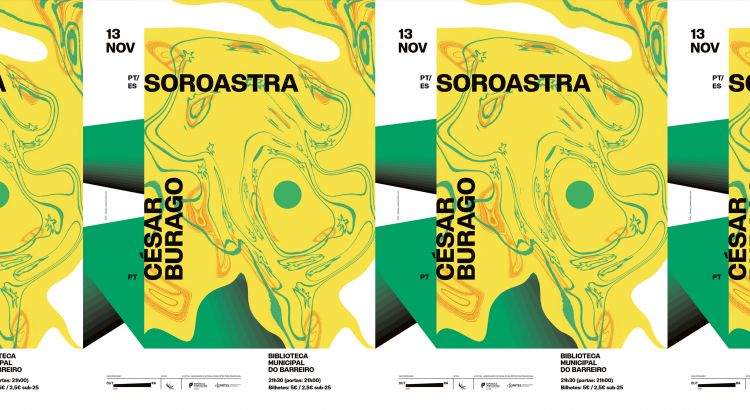
After a long and intense OUT.FEST, we're back to our regular programming with brand new cosmic music from the Soroastra duo (made up of Afonso Simões and Spain's Borja Caro), in one of the first presentations of their wonderful new album "Olimpíadas de Pensamentos Acelerados", as well as the always unique César Burago in a solo presentation armed with small percussive instruments, finally returning to Barreiro after his originally planned show in the spring of 2020 had to be cancelled.
These concerts will take place in the Auditorium of the Barreiro Municipal Library on Saturday, November 13th, starting at 21:30. Tickets, priced at the usual 5€ (2.5 for under 25 yrs old) can already be purchased via outra.bol.pt